
A disposable cover can fit the vehicle yet fail at the bottom edge. Loose film reaches the floor, while excessive elastic tension can tear during fitting.
I choose an elastic-hem disposable car cover when controlled lower-edge retention matters and the vehicle range is predictable. I choose an open-bottom cover for quick draping and wider size tolerance. I approve either design only after checking installation, coverage, floor contact, removal, film stress, and the intended indoor workflow.
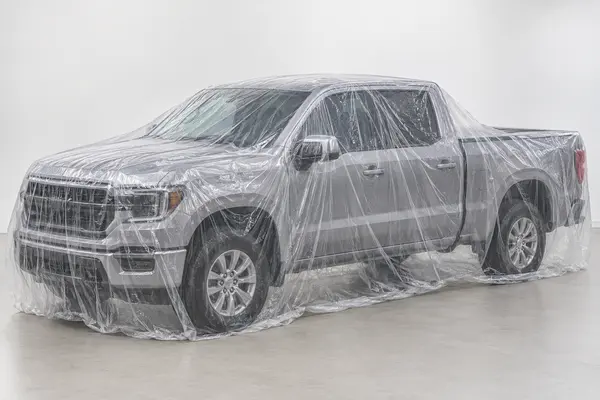
I treat the lower edge as part of the full cover system. A short installed trial shows more than a catalog label or loose-film sample.
Which Workshop Jobs Fit Each Bottom Design?
One edge design cannot solve every job. If I ignore dwell time, vehicle mix, and staff movement, a useful feature can become a daily inconvenience.
I start with the job. I prefer elastic retention for short indoor protection when a fitted lower edge helps. I prefer an open bottom when fast placement, broad vehicle coverage, or controlled access below the body matters more.
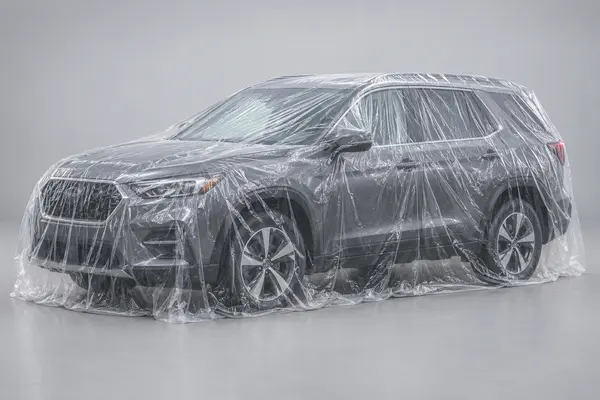
I Match Retention to the Actual Task
I map where the covered vehicle will stand, how long protection remains, how often staff move around it, and whether technicians need lower-body access.
An elastic hem can gather the lower edge and reduce free material around the floor. I consider it for known sedans or SUVs when the size fits without hard stretching. The elastic must stay enclosed.
An open-bottom cover can drape over a wider vehicle range and is simple to remove vertically. I consider it when staff need lower-body access or can keep excess film clean and clear of walking paths.
| My workshop condition | My starting choice | What I verify |
|---|---|---|
| Predictable sedan or SUV range | Elastic hem | Retention without over-stretching or exposed elastic |
| Mixed body sizes | Open bottom | Coverage, excess film, and floor-contact control |
| Frequent movement around the vehicle | Elastic hem may help | Walking clearance and stable lower edge |
| Lower-body access during service | Open bottom may help | Planned lifting, positioning, and clean handling |
| Outdoor or long-term storage | Neither by assumption | I select a purpose-designed cover for that separate use |
I keep this decision inside the intended temporary workshop application. I do not turn a thin disposable dust cover into an unsupported outdoor or long-term protection claim.
How Do I Test Installation and Lower-Edge Retention?
A cover can look secure immediately after fitting but creep, release, or tear when staff walk around the vehicle. A static photo hides those problems.
I run the same install-move-access-remove trial on both designs. I record installation time, stretching, coverage, floor contact, edge movement, access, tearing, and clean removal on representative vehicles.
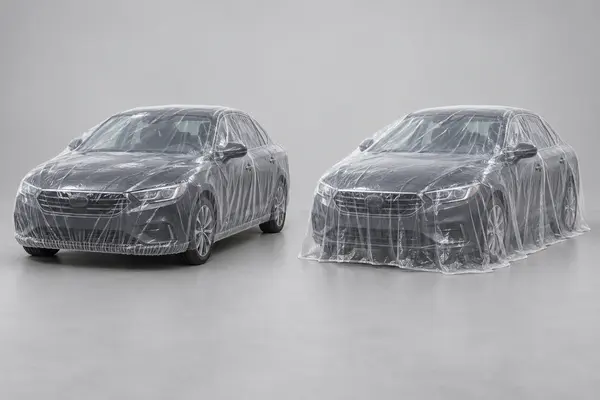
I Use One Repeatable Installed Trial
I begin with a clean vehicle and floor. I identify the cover center and opening before the film touches the body. Two people install larger covers when that matches normal practice. I never drag film from the floor onto paint.
For an elastic hem, I watch the highest-stress points around bumpers, mirror areas, wheel arches, and lower corners. I check whether the edge gathers evenly or pulls one panel harder than another. I also inspect the seam or channel that retains the elastic. Any exposed, broken, or uneven elastic is a rejection signal.
For an open bottom, I measure film below the useful coverage line. I walk around the vehicle and check whether shoes, carts, hoses, doors, or tools catch the edge. I document any approved positioning, weighting, or taping method.
| My trial step | Elastic-hem check | Open-bottom check |
|---|---|---|
| Unfold and orient | I find the opening without twisting the hem | I find the opening and long sides quickly |
| Pull over vehicle | I note tension and stress points | I note excess material and floor contact |
| Walk-around | I watch for release or edge creep | I watch for snagging and trip risk |
| Access panels | I check whether the hem blocks planned access | I lift and replace the edge consistently |
| Remove | I release tension without snapping film onto paint | I lift film without dragging the dirty edge upward |
| Inspect | I check film, seams, elastic channel, and paint | I check film, edge condition, cleanliness, and paint |
I repeat the trial on the smallest and largest target vehicles. One successful fit does not prove that one size covers a complete distributor range.
Which Size and Material Variables Must Stay Equal?
An elastic sample can appear better simply because it is larger or thicker. If I change several variables at once, I cannot identify what improved the result.
I compare covers with the same intended use, film construction, thickness basis, finished dimensions, seams, and fold pattern. I change only the bottom-edge design, then repeat the same vehicle trial.
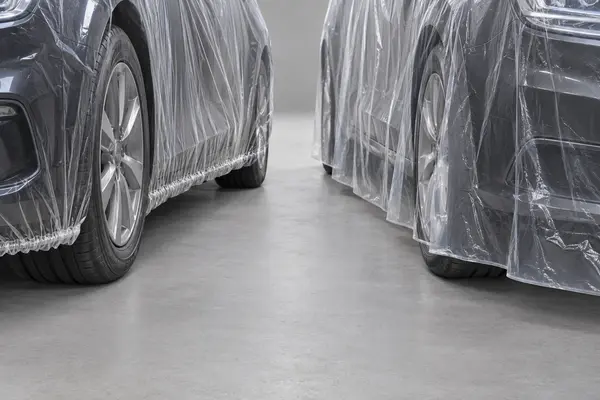
I Separate Edge Design from the Rest of the Cover
I write finished dimensions before comparing retention. For a bag-style cover, I identify length, flat width or opening measurement, formed end, seam position, and open side. A drawing defines the measurement method.
I also write film material and thickness with units and tolerance. Resin choice, layer construction, film uniformity, and seam quality can change the result. My guide to disposable plastic car cover sizes explains how I build a compact fit range.
For an elastic design, I add elastic location, enclosed construction, relaxed opening, practical stretched opening, and joining method. I do not request the highest possible tension. I want enough retention for the approved vehicle group without difficult installation or concentrated stress.
| My comparison field | Why I hold it constant | Failure I avoid |
|---|---|---|
| Intended use | Keeps the same protection task | Comparing dust protection with paint masking |
| Finished dimensions | Controls real coverage | Mistaking a size advantage for better retention |
| Film construction | Controls handling and strength context | Attributing resin or layer behavior to the edge |
| Thickness basis | Makes quotations comparable | Mixing microns, mils, and vague heavy-duty labels |
| Seam and fold pattern | Controls opening and stress | Blaming the hem for a seam or orientation problem |
| Pack format | Controls installation condition | Testing a clean folded piece against a damaged roll |
I use treated automotive masking film separately when the job requires overspray retention. I do not describe every transparent full-car cover as paintable.
What Should I Put in the Bulk-Order Specification?
A sample can pass while the shipment changes elastic, opening size, folds, or carton labels. A vague item name allows the approved result to disappear.
I give each edge design its own item code. I specify use, material, dimensions, bottom construction, elastic details when used, seams, folding, packing, quantity, inspection, approved sample, and change control.
I Turn the Trial Result Into Order Language
I start with the exact identity: disposable plastic full-vehicle cover for temporary workshop protection. This prevents confusion with a disposable seat cover, treated masking film, or durable fabric car cover. I then state elastic-hem or open-bottom construction in the first specification line.
My bulk disposable car cover checklist controls the complete product. For an elastic version, I attach a lower-edge photo and measurement drawing. For an open version, I identify the straight edge, allowed finish, and orientation in the fold. If a colored centerline is approved, I treat it as a separate alignment feature rather than a substitute for correct retention.
I include covers per roll or pack, cartons, total piece count, carton marks, and quantity tolerance. My receiving check confirms product identity. Any material, dimension, seam, elastic, edge, fold, perforation, or packing change returns to sample approval.
| My order control | Elastic-hem version | Open-bottom version |
|---|---|---|
| Bottom identity | Enclosed elastic hem | Straight open edge |
| Measurement | Relaxed and approved stretched opening | Finished opening and edge position |
| Visual check | Even gathering and no exposed elastic | Clean edge without unintended restriction |
| Functional check | Install, retain, access, and release | Install, position, access, and lift cleanly |
| Packing | Fold protects the elastic channel | Fold presents the opening clearly |
| Change control | Elastic, seam, material, size, or fold | Edge, seam, material, size, or fold |
I use a raw-material selection process and do not use recycled production waste as substitute material. I focus on stable quality, fair value, order quantity accuracy, and export-risk reduction. I still rely on the signed sample and written trial because they define the buyer’s accepted result.
I choose the bottom design from the workshop task, prove it on real vehicles, and lock the installed result into one measurable bulk-order specification.