
A cover that is too small leaves panels exposed, while an oversized one drags and bunches. The wrong size mix creates waste across a busy body shop.
I stock disposable plastic car covers by measured vehicle envelopes, not vehicle labels alone. I compare body length, combined width-and-height coverage, bumper clearance, opening direction, film handling, and trial-fit results before choosing a compact size range for sedans, SUVs, and pickups.
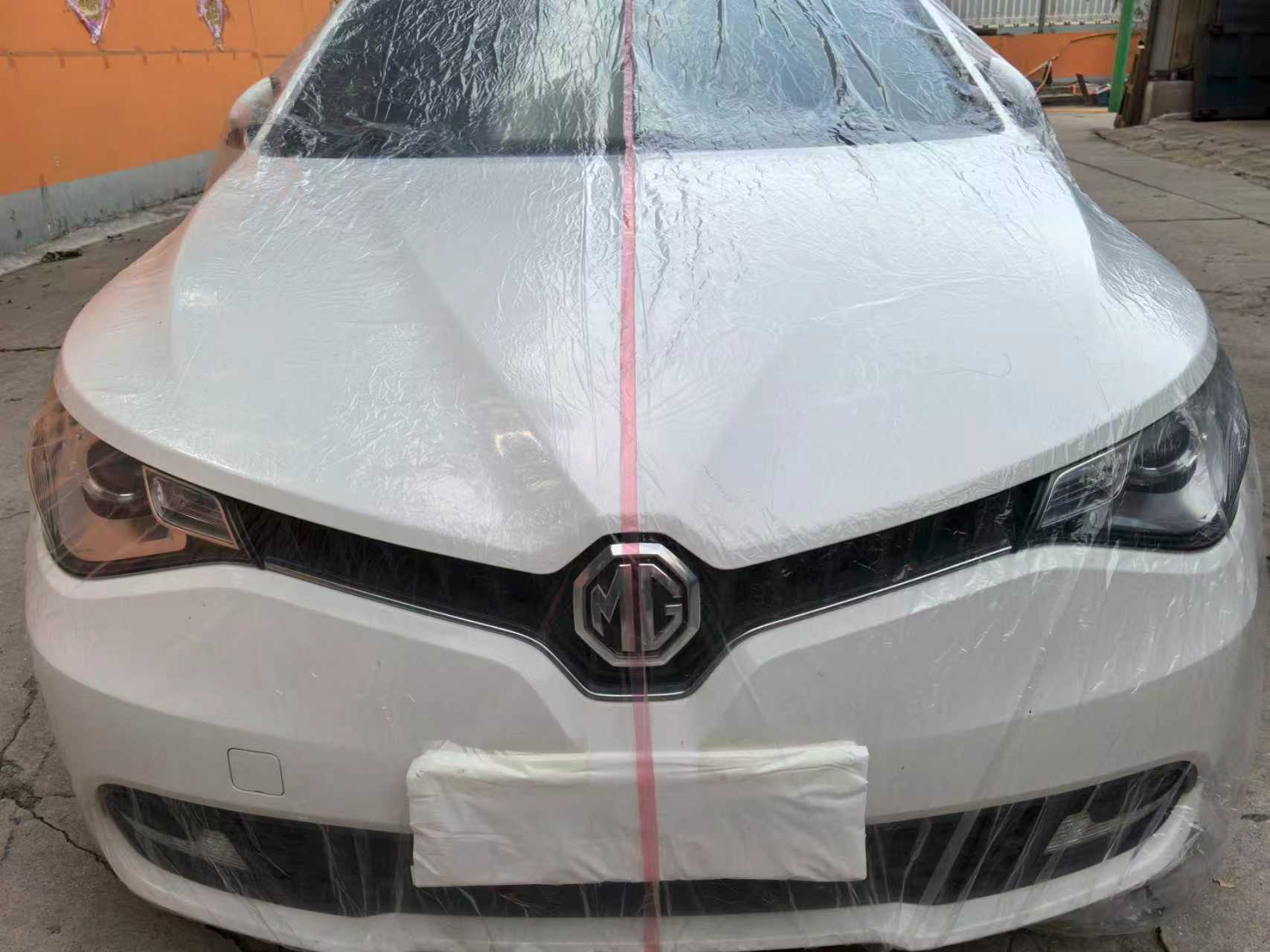
I use the following process to turn mixed vehicle demand into clear cover sizes, practical tests, and an order specification that a supplier can follow.
How Do I Measure Vehicles for Disposable Cover Sizing?
A familiar label such as SUV can hide major size differences. If I order by category alone, film may miss a bumper or pool on the floor.
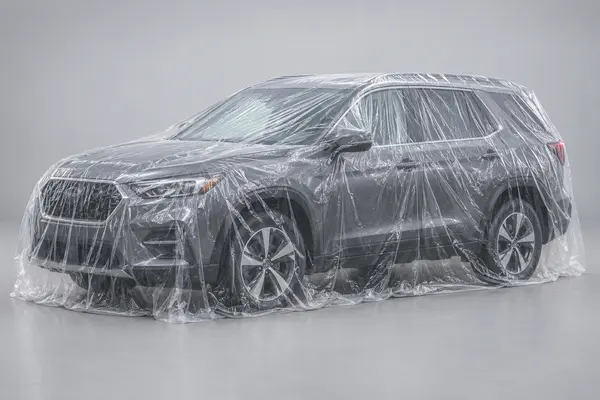
I record overall length, maximum width, height, and the distance over the roof from one lower side to the other. I then compare those measurements with the cover's finished dimensions and allow workable handling margin.
I Build a Simple Vehicle Envelope
I start with the largest vehicle that regularly enters each service lane, not a brochure image of a typical model. Overall length helps me judge front-to-rear coverage. Maximum width includes mirrors only when the shop plans to keep them extended during covering. Vehicle height matters because a taller roof uses more of the sheet across the sides. I also measure the path from one lower rocker area, over the roof, to the opposite lower rocker area. That path gives me a useful cross-vehicle envelope.
I do not treat a disposable cover like a fitted outdoor cover. I need enough loose film for a technician to find the center, pull the sheet over the body, and reach the lower panels without stretching it hard. At the same time, excessive loose material can touch a dirty floor, catch under shoes, and slow removal. Roof racks, antennas, mirrors, spoilers, and pickup beds can change the real fit even when two vehicles have similar listed dimensions. I therefore record these features with the measurements and test the actual sample.
| Measurement I record | How I take it | Why it affects my order |
|---|---|---|
| Overall length | Frontmost to rearmost body point | It controls bumper-to-bumper reach |
| Maximum width | Widest planned covered position | It affects side and mirror clearance |
| Overall height | Floor to highest regular point | It consumes film across both sides |
| Cross-body path | Lower side, over roof, to lower side | It checks usable sheet width |
| Special features | Rack, antenna, spoiler, long bed | They can need added slack or another size |
Which Size Mix Do I Stock for Sedans, SUVs, and Pickups?
One universal cover seems easy to buy, but it often shifts cost into wasted film and awkward handling. Too many sizes create a different stock problem.
I usually build a small core range from actual job records: one size for most cars, one for taller or longer SUVs, and one longer size for pickups or vans when demand supports it.
I Let Service-Lane Demand Set the Range
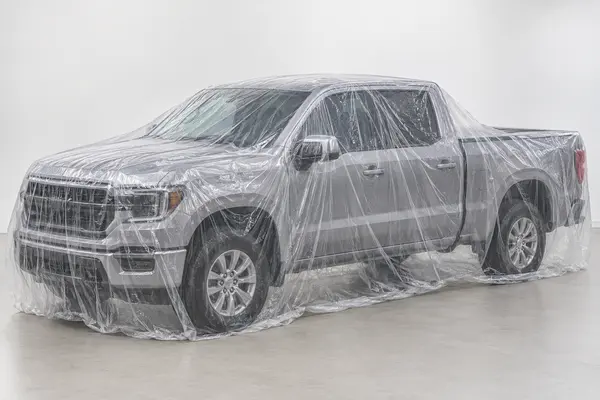
I review a practical sample of completed jobs and group vehicles by measured envelope, not only by market class. Compact crossovers can fit near passenger cars, while long three-row SUVs may need much more length and side drop. A crew-cab pickup with a long bed creates a different front-to-rear demand from an SUV of similar height. Vans may need their own size because height can use the available sheet width before the ends reach both bumpers.
I then look for the smallest number of sizes that covers most regular work without forcing a poor fit. I keep the SKU names clear, such as car, tall SUV, and long pickup, but I place finished dimensions on every carton and internal picking label.
I also consider storage and replenishment. Adding a slow-moving size can split order quantities, occupy shelf space, and raise the chance that staff open the wrong roll. I prefer evidence from actual vehicle flow over a long catalog of theoretical choices.
| Vehicle group I track | Common fit risk I check | Stock decision I consider |
|---|---|---|
| Sedans and compact crossovers | Unnecessary side and end excess | Core size for regular volume |
| Tall or long SUVs | Short side drop or exposed rear bumper | Larger second size |
| Crew-cab pickups | Cab height plus bed and tailgate length | Long size when volume supports it |
| Vans or unusual vehicles | Height consumes usable width | Dedicated size or approved exception |
How Do I Test Fit Before a Bulk Order?
Dimensions on paper can look correct while the cover performs poorly in a real bay. A weak trial can turn a full shipment into daily frustration.
I test each proposed size on representative vehicles with the same workflow the shop will use. I record coverage, opening speed, floor contact, snag points, removal, and repeatability before approval.
I Use a Repeatable Trial Instead of a Quick Look
I select at least one vehicle near the lower end and one near the upper end of each proposed size group. I keep mirrors, antennas, and racks in their normal shop position. I test the usual staffing method. I note whether both ends and sides reach their planned positions without hard stretching.
I check the floor line carefully. Some extra film provides handling freedom, but long folds on the floor can pick up dirt or become a trip risk. I also watch for thin areas around mirrors, roof corners, spoilers, and pickup-bed edges. After the job, I check whether the cover can be lifted away without brushing protected surfaces with its dirty outer face.
A colored guide can make orientation faster, but it does not fix an incorrect size. I treat it as a separate handling choice and use my verified guide on colored centerlines for disposable plastic car covers when I compare samples. I photograph or write down trial results by vehicle model, cover size, and operator. This record gives purchasing a stronger approval basis than memory.
| Trial checkpoint | My pass question | Warning sign |
|---|---|---|
| Opening and orientation | Can the normal operator find the center quickly? | Repeated flipping or twisting |
| End coverage | Do both bumpers remain covered as planned? | Stretching or exposed corners |
| Side drop | Does film reach both lower sides? | One side rises when the other is adjusted |
| Floor control | Is the handling margin manageable? | Large dirty folds or trip risk |
| Removal | Can staff lift it away cleanly? | Outer film brushes the protected body |
What Do I Put in the Purchase and Packing Specification?
A purchase order that says only large plastic car cover leaves too much open to interpretation. Small production or packing changes can upset a proven workflow.
I state finished dimensions, material, thickness definition, folding method, opening direction, guide-line details, roll or bag format, piece count, carton quantity, labels, and approved sample reference.
I Make Every Order Point Verifiable
I write dimensions with units and identify which number is length and which is width. I define how thickness is stated and ask the supplier to use the same measurement basis during sample and bulk discussions. I record whether the cover is individually folded, perforated on a roll, or packed another way. For rolls, I specify pieces per roll, perforation expectations, roll count per carton, and total pieces per carton. I also state how the first opening edge should present to the operator.
If I use a colored centerline, I specify its position and color without making an unsupported performance claim. I check that the quantity unit cannot be confused among pieces, rolls, and cartons. This protects order quantity accuracy and makes receiving easier.
I approve a physical sample or a clearly identified pre-production sample against the same checklist used in the shop. My broader bulk-order guide for disposable plastic car covers covers film and packing points beyond size. From a manufacturer position, I use a raw-material selection process and do not use recycled production waste as substitute material. I focus on stable quality, fair value, order quantity accuracy, export-risk reduction, experienced production staff, and flexible production lines for large orders. I still require the written specification and approved sample to guide each order.
| Specification field | What I write | What I verify |
|---|---|---|
| Finished size | Length × width with units | Sample measurement and fit |
| Material and thickness | Agreed material and measurement basis | Same wording across documents |
| Format | Folded piece or perforated roll | Normal opening workflow |
| Pack quantity | Pieces per roll, rolls per carton, total pieces | Purchase, packing, and receiving totals |
| Identification | SKU, size name, carton mark, buyer data | Correct picking between similar sizes |
| Approval control | Dated sample or reference code | Bulk order follows the accepted version |
I choose cover sizes from measured vehicles, real fit trials, and clear packing data. That approach gives a mixed body shop useful coverage without an unnecessary wall of SKUs.