
Wrong width choices force technicians to trim excess film or patch exposed panels. That wastes material and slows masking, but a practical width mix fixes both problems.
I recommend distributors stock a narrow width for localized work, a mid-width for doors and windows, and a wide format for large panels. I select final sizes only after mapping customer jobs, folded-roll handling, tape edge, roll length, carton quantity, and local measurement preferences.
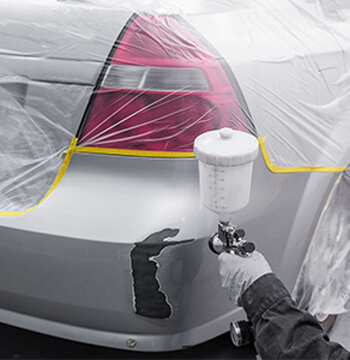
I use the following process to turn a long size list into a focused range that body shops can understand, stock, and reorder.
Which Pre-Taped Masking Film Widths Match Common Body-Shop Jobs?
A single width looks simple on a price sheet, but it creates waste on small repairs and incomplete coverage on larger jobs. I prefer a job-based range.
I normally divide the range into narrow, medium, and wide coverage bands. I then match each band to repeated repair tasks instead of assuming the widest roll gives every shop better value.
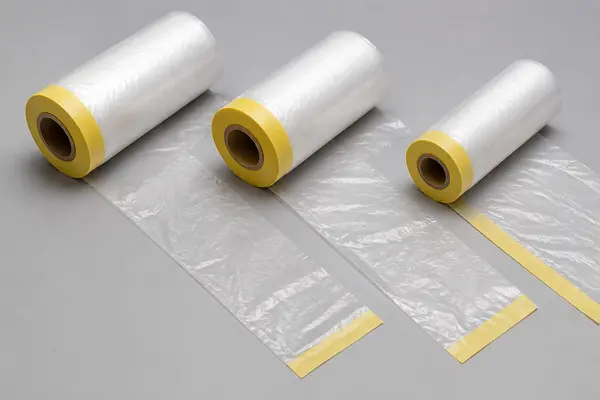
I Build a Three-Level Width Ladder
I start with the expanded film width, which is the coverage width after the folded film opens. I treat the figures below as practical starting bands, not fixed universal standards. I confirm the exact sizes with samples and the customer’s normal vehicle mix.
| Expanded-width band | Where I position it | Buying reason I check |
|---|---|---|
| About 450–650 mm | Mirrors, lamps, pillars, edges, and localized panel work | Less excess film around small areas |
| About 900–1,400 mm | Doors, windows, quarter panels, and many side repairs | Useful balance between reach and handling |
| About 1,800–2,700 mm | Larger side sections, roofs, openings, and broad protection zones | Fewer joins across a large area |
I ask distributors for sales or usage data before choosing exact widths. I want to know whether their customers mainly complete spot repair, single-panel refinishing, collision work, or mixed jobs. I also ask which vehicle classes appear most often. A compact-car repair network may not consume widths in the same pattern as a shop that handles vans and large SUVs.
I also compare the film used per repair, not only the price per roll. A cheaper wide roll can create unnecessary waste on a mirror or lamp. A narrow roll can look economical until a technician needs several overlapping pieces. I use the work area, trimming time, and number of joins as the real decision points. For a broader specification framework, I also refer buyers to my pre-taped masking film bulk-order guide.
Why Should I Specify Both Folded Width and Expanded Width?
Two rolls can promise similar coverage yet feel very different in the hand or carton. If I specify only expanded width, receiving disputes become more likely.
I record the compact folded-roll width and the fully expanded film width as separate values. I also confirm how the film unfolds so the buyer, warehouse, and end user evaluate the same product.
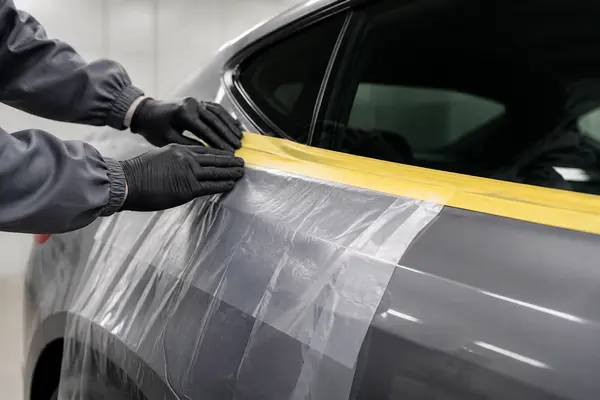
I Put Both Measurements on the Approval Sheet
I view expanded width as the coverage specification and folded width as the handling specification. The expanded dimension tells me how much surface the film can protect. The folded dimension affects how easily a technician carries, positions, and starts the roll. It also affects shelf presentation and carton planning.
| Item I specify | What I mean | Why I record it |
|---|---|---|
| Folded roll width | Compact width before the film opens | Handling, storage, dispenser fit, and receiving checks |
| Expanded film width | Full coverage after unfolding | Job suitability and material planning |
| Roll length | Usable length requested per roll | Consumption estimates and reorder timing |
| Unfolding direction | How the folded layers open from the taped edge | Application workflow and sample approval |
I ask for a simple measurement drawing because names such as small, medium, large, half-folded, or multi-folded can mean different things. I want arrows that show the folded width, expanded width, roll length, and tape position. I also want the quotation, sample label, purchase order, and carton mark to use the same unit. A metric-only buyer and an inch-based buyer can otherwise approve different interpretations of the same number.
I list exact dimensions on the purchase order rather than relying on a supplier’s general catalog name. This small step helps me reduce receiving arguments and keeps repeat orders consistent. Buyers can view the main pre-taped masking film product page before building their own measurement sheet.
How Do Tape Edge and Film Behavior Affect the Width Choice?
The right width still fails when the tape lifts, the film opens poorly, or overspray handling is unsuitable. I therefore test width and material behavior as one system.
I approve each width with its actual tape and film combination. I check application, unfolding, cling, surface handling, removal, and the buyer’s planned paint process before confirming a bulk specification.
I Test the Complete Roll, Not Separate Components
I do not assume that one approved tape automatically performs the same way on every film width. A wider hanging section places different handling demands on the taped edge. The technician may also reposition a long section more often while unfolding it. I therefore test the finished pre-taped roll in the intended application.
I first apply the tape edge to clean representative surfaces permitted by the buyer’s process. I then unfold the film slowly and watch whether the tape remains seated. I check whether the film clings near the vehicle or moves away during handling. I also check whether the film can be cut or torn in the planned workflow without pulling the masked edge loose.
I ask the buyer about paint type, booth or work-area conditions, drying process, expected contact time, and removal method. I do not invent a universal temperature or dwell-time limit. I require the requested condition to appear in the specification and sample evaluation. If the buyer needs a defined heat range, I ask for the exact test condition and acceptance method before the order.
I inspect the film surface as part of the same review. If the buyer expects the exposed side to hold overspray, I ask for that requirement directly. I do not replace it with a vague phrase such as “paintable film.” I compare the sample before and after the buyer’s own trial. I also review tape removal for tearing, transfer, or edge problems on the agreed surfaces. My separate tape adhesion test guide explains how I organize that approval in more detail.
What Should a Distributor Put in the Bulk-Order RFQ?
An RFQ that says only “pre-taped film, assorted sizes” leaves critical details open. I replace vague descriptions with a short, repeatable specification table.
I include exact folded and expanded widths, length, film and tape requirements, units, roll and carton quantities, labels, artwork, sample approval, inspection method, and allowed tolerances in the RFQ.
I Link Every Commercial Line to an Approval Point
I use one row per size because mixed-size orders create easy counting and labeling errors. I avoid one general description followed by several unexplained numbers. I give every width its own item code, unit, roll count, carton count, and label wording.
| RFQ field | What I enter | What I verify before approval |
|---|---|---|
| Item identity | Automotive pre-taped masking film | Film and attached tape are shown clearly |
| Dimensions | Folded width × expanded width × roll length | Units and measuring method match |
| Tape position | Attached along the specified film edge | Sample matches the drawing |
| Material requirements | Agreed film and tape descriptions | No unsupported substitute wording |
| Performance review | Buyer-defined application and removal checks | Conditions and acceptance are recorded |
| Packing | Rolls per carton and size mix | Carton labels identify each item |
| Quantity | Per-size order quantity | Total and per-SKU counts agree |
| Artwork | Plain or approved private label | Final file and placement are confirmed |
I request a representative sample for every width-and-tape combination that matters. I photograph the sample label and measurements for the approval record. I then compare the production-order documents with that record before shipment preparation. I do not rely on memory or a message that says the product is “the same as last time.”
From my manufacturer position, I use a raw-material selection process, and I do not use recycled production waste as substitute material. I focus on stable quality, fair value, order quantity accuracy, and export-risk reduction. I also use experienced production staff and flexible production lines to support large orders. I present these points as operating priorities, while I still ask the buyer to approve the exact sample and written order details.
I choose a width range by real repair jobs, then lock folded dimensions, tape-film behavior, packing, and quantities in one approval sheet before placing the bulk order.