
A paper floor mat can look acceptable yet tear during service, waste stock, and disappoint customers. I prevent this by specifying weight together with construction and use.
I choose disposable car floor mat paper weight by service conditions, not one universal number. I compare GSM or a clearly defined basis weight, coating, size, wet exposure, tear resistance, and cost per protected vehicle before I approve a bulk order.
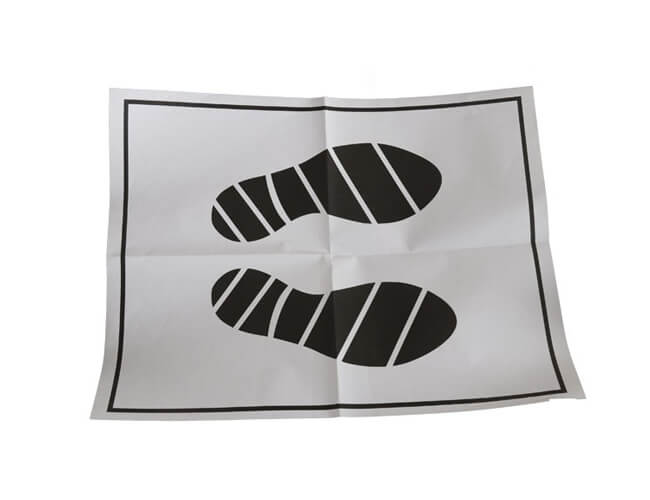
Paper weight matters, but it never works alone. I use the following checks to turn a vague request for “heavy paper” into a practical purchase specification.
What Paper-Weight Terms Should I Compare?
Weight labels can sound precise while describing different measurement systems. If I compare them directly, I may buy a construction that does not match my sample.
I ask for GSM as the common comparison point, then record whether the quoted weight covers paper only or the complete coated mat. If a supplier uses pounds, I also ask for the paper grade and measurement basis.
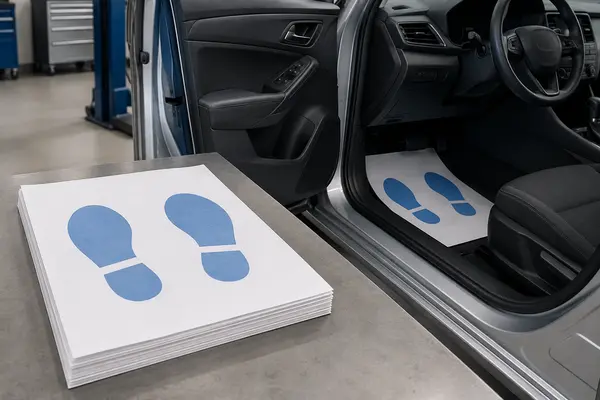
I Normalize the Unit Before I Compare Samples
I prefer GSM because it states mass per square meter. This gives me one area-based reference when I compare suppliers across markets. A pound label can still be useful, but I do not treat every “60 lb” statement as directly equal. The meaning can depend on the paper category and its standard sheet basis. I therefore ask the supplier to add GSM to the specification or provide enough information for a documented conversion.
I also separate paper weight from total construction weight. A mat may combine paper with a polyethylene backing or coatings. A supplier may describe only the paper stock, while another supplier may describe the combined construction. Both numbers can look reasonable, yet the products can behave differently around water, oil, shoe pressure, and movement.
I put the measurement method directly on my comparison sheet:
| Item I record | Why I need it | Question I send |
|---|---|---|
| Paper GSM | Compares the paper layer by area | “What is the nominal GSM of the paper?” |
| Total GSM | Shows the complete mat construction | “Does this include every coating and backing?” |
| Coating position | Changes liquid-barrier behavior | “Is the coating on the top, back, or both sides?” |
| Finished size | Affects total material per piece | “What are the finished width and length?” |
| Tolerance | Helps me judge lot consistency | “What production tolerance do you use?” |
I never approve a bulk order from one weight label alone. I want the number, the layer it describes, the finished dimensions, and a physical sample to point to the same product.
How Should I Match Paper Weight to the Dealership Task?
An expensive mat can still be the wrong mat. If I ignore the service environment, I may overpay for dry work or under-specify wet protection.
I match the construction to dwell time, footwear contamination, movement, and liquid exposure. I use lighter uncoated paper for brief dry protection and stronger or backed options when service work brings moisture, oil, or repeated foot movement.
I Start With the Real Use Case
I first define where the mat will be used. A sales handover, a quick inspection, a detailing bay, and a repair workshop place different demands on disposable floor protection. I also ask how long the mat normally remains in the vehicle. A product used for a few minutes does not face the same stress as one left in place through a full service process.
I use paper weight as one part of that decision:
| Dealership use | Main risk I consider | Construction direction I evaluate |
|---|---|---|
| Indoor vehicle display | Dust and presentation | Clean printing, suitable paper weight, flat appearance |
| Customer handover | Short use and neat presentation | Balanced weight, good print, easy disposal |
| Dry inspection | Shoe dirt and limited movement | Paper strength and adequate footprint coverage |
| Detailing bay | Damp footwear and longer handling | Higher wet resistance or a suitable backing |
| Service workshop | Oil, moisture, and repeated movement | Barrier layer, tear resistance, and slip behavior |
I do not turn this table into a universal grade chart. The same nominal GSM can perform differently when the fiber mix, coating, embossing, dimensions, and converting quality change. I treat the table as a way to select samples for testing.
For buyers comparing basic and moisture-resistant products, I also use the distinctions in my guide to waterproof paper floor mats for bulk orders. That comparison helps me decide whether added weight alone is enough or whether the job needs a barrier construction.
How Do I Test Candidate Paper Weights Before a Bulk Order?
A neat sample can hide weak performance. If I approve it by touch alone, normal shoe movement or damp use may expose problems after delivery.
I test each candidate in the same vehicle conditions and record the result. I compare dry handling, damp exposure, edge tearing, movement, print rub, and removal instead of relying on a subjective “thick” or “thin” judgment.
I Use a Repeatable Approval Check
I begin by labeling every sample with its paper GSM, total construction, finished size, and supplier reference. I then place the mat in a clean driver footwell and check whether it covers the practical shoe-contact area without interfering with pedals. I do not use a loose disposable protector while driving. My evaluation is for stationary service, inspection, detailing, and handover work.
I use the same sequence for every candidate:
- I handle the dry mat by one corner and note whether the edge bends or tears too easily.
- I step on it several times with clean work shoes and check wrinkling, sliding, and surface damage.
- I apply a small, controlled amount of water to a test area away from the vehicle and inspect penetration after a fixed time.
- I rub the printed area with a dry and slightly damp white cloth to look for transfer.
- I fold and remove the used mat to see whether dirt stays contained or falls onto the carpet.
- I compare the result with my approved reference sample and record photos.
I avoid inventing a universal pass number because each dealership program has a different risk level. I set my own acceptance criteria before testing. For example, I can define that the mat must remain removable as one piece after the intended service period. I can also define acceptable movement, edge damage, print transfer, and visible liquid penetration.
This process tells me whether a higher paper weight creates useful value. It also shows when a coating or backing matters more than adding paper. I use my comparison of poly-backed paper mats and adhesive plastic floor protection when I need to evaluate a different protection format.
What Should I Put in the Bulk Purchase Specification?
“Heavy-duty paper mat” is too vague for repeat orders. If I leave key details open, a later shipment may differ while still carrying the same product name.
I specify the paper and total weight, construction, size, print, packing, quantity method, sample reference, and inspection points. I make every important feature measurable or visually tied to an approved sample.
I start with the exact product name: disposable automotive paper floor mat. This prevents confusion with a plastic roll floor protector, molded floor liner, textile car mat, or full vehicle cover. I then state the intended use, such as dealership handover or stationary workshop service.
My purchase sheet includes these fields:
| Specification field | What I define |
|---|---|
| Material | Paper type and whether a PE layer is included |
| Weight | Nominal paper GSM and total GSM when coated |
| Construction | Uncoated, back-coated, or double-coated |
| Finished size | Width and length with agreed tolerance |
| Surface | Smooth, embossed, or ridged if applicable |
| Artwork reference, color count, position, and orientation | |
| Packing | Pieces per inner pack and carton |
| Quantity check | Counting method and acceptable order-quantity process |
| Approval | Signed or coded reference sample |
| Inspection | Weight, size, visual, packing, and functional checks |
I also ask how the supplier controls changes in raw material. From my manufacturer position, I use a raw-material selection process, and I do not use recycled production waste as substitute material. I present this as my operating approach, not as an unsupported guarantee about every possible performance result.
For repeat orders, I keep one approved sample and its specification together. I focus on stable quality, fair value, order quantity accuracy, and export-risk reduction. I also use experienced production staff and flexible production lines for large orders. These points help me organize supply, but I still confirm the order details in writing.
Buyers can review my disposable car paper floor mat product page before requesting samples. I recommend that buyers send the intended use, target size, preferred construction, print needs, packing format, and annual demand range in the first inquiry.
I choose paper weight through a defined use case, normalized units, repeatable sample tests, and a complete specification—not through a vague “heavy-duty” label.