
One floor protector cannot suit every service visit. The wrong choice can slide, tear, trap moisture, leave residue, or create extra work near the pedals.
I choose poly-backed paper mats for short service visits, visible branding, and simple flat-sheet handling. I choose full-adhesive plastic protection for repeated entry, wet conditions, or longer repairs. I test movement, moisture barrier, carpet compatibility, clean removal, pedal clearance, dispensing, and count before a bulk order.
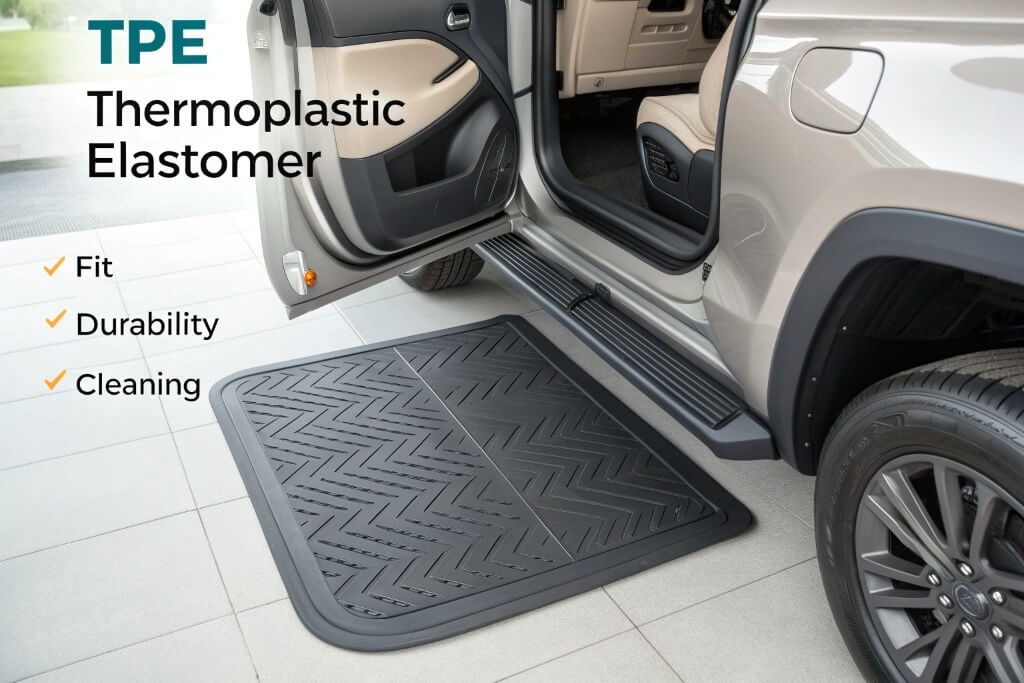
I compare both products under the same service conditions. This keeps the decision focused on usable protection and workshop flow rather than one material claim.
Which Floor Protector Fits My Service Job?
A quick oil change and a multi-day body repair create different foot traffic. One standard mat can waste money or provide too little protection.
I use poly-backed paper mats for short, controlled visits and customer-facing presentation. I consider full-adhesive plastic protection when technicians enter repeatedly, the floor is damp, or the vehicle remains in service longer.
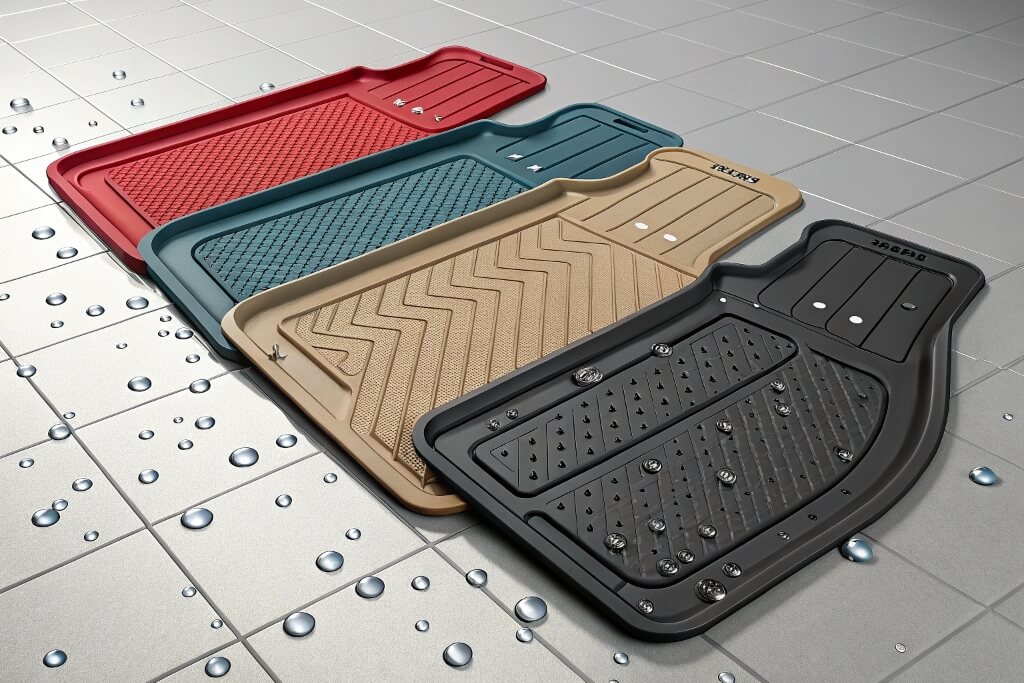
I Match the Product to Time, Traffic, and Surface
I begin with the service path. I record how long the vehicle stays, how many people enter it, whether shoes may carry water or grease, and whether the original carpet mat remains in place. I also check whether the protector will sit on carpet, a textile mat, or another removable surface.
Poly-backed paper gives me a printable top surface and a plastic moisture barrier underneath. I can place one flat sheet quickly and remove it when the short job ends. I choose this format when visible dealership branding and a clean handover matter. I still specify paper weight, backing construction, size, print, and orientation because “waterproof paper mat” is not a complete purchase description.
Full-adhesive plastic uses light adhesive across its contact side. I consider it when movement during repeated entry is my main concern. I do not assume it fits every carpet. I test adhesion and removal on the target surfaces, including aged, delicate, high-pile, or recently cleaned materials.
I may stock both products under separate item codes. A two-level program lets my service team use paper for routine work and adhesive protection for jobs with higher traffic or moisture exposure.
| My service condition | My first option | My reason for testing it |
|---|---|---|
| Quick inspection or oil change | Poly-backed paper | Fast placement and visible presentation |
| Customer test drive | Poly-backed paper | Simple issue and removal |
| Repeated technician entry | Adhesive plastic | Better position control on approved carpet |
| Wet or muddy workshop traffic | Adhesive plastic | Continuous plastic moisture barrier |
| Mixed service department | Two-item program | Protection level follows the job |
How Do Moisture Control and Movement Differ?
A mat may resist liquid yet still move toward the pedals. Another may stay fixed but remove poorly from an unsuitable carpet.
I assess barrier performance, surface grip, edge lift, bunching, adhesive transfer, and pedal clearance separately. I never use “non-slip” or “waterproof” as a substitute for a fitted vehicle trial.
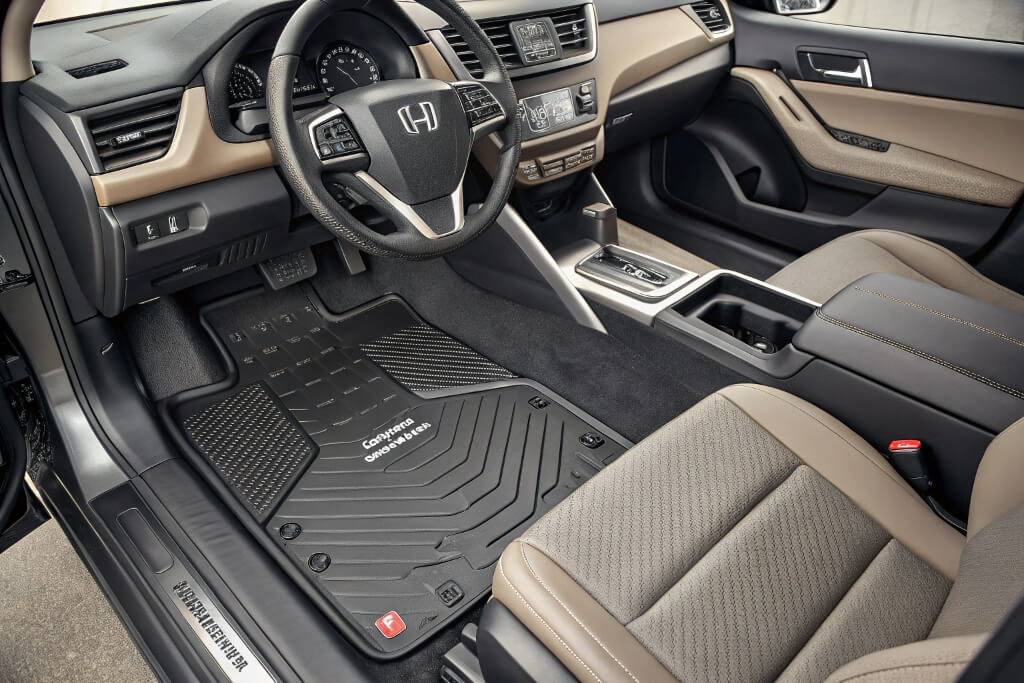
I Test the Complete Floor Interaction
For poly-backed paper, I place the printed paper side upward and the coated side toward the vehicle floor. I add an agreed amount of test liquid to the top and inspect the underside after a defined time. I also step on the mat with representative footwear, enter and exit several times, and check edge curl, tearing, and movement.
For adhesive plastic, I clean and dry the approved test surface according to the buyer’s normal process. I apply the sheet without stretching it, press it evenly, and observe whether corners lift. After the agreed dwell time, I remove it slowly and inspect the carpet for adhesive transfer, fiber pull, discoloration, or other visible change. I repeat the test at the longest planned service period, not only after a few minutes.
I keep every temporary protector clear of the accelerator, brake, clutch, footrest, seat rails, and moving controls. I check placement with the seat in more than one common position. I remove the protector before the vehicle is returned unless the buyer has a controlled handover rule. A printed removal message can support that process, but it does not replace staff checks.
| Performance point | Poly-backed paper check | Adhesive plastic check |
|---|---|---|
| Moisture | Top exposure and underside inspection | Film continuity and edge condition |
| Movement | Entry, exit, turning, and edge curl | Adhesion, edge lift, and bunching |
| Removal | Clean lift without torn pieces | Clean peel without transfer or fiber change |
| Durability | Paper scuffing and backing separation | Puncture, stretch, and adhesive consistency |
| Safety area | Distance from pedals and controls | Distance from pedals and controls |
How Should Packing, Dispensing, and Branding Affect My Choice?
A good sheet can still fail operationally when packs are hard to issue, rolls do not fit dispensers, or labels hide the real quantity.
I specify flat-sheet packs for paper mats and roll geometry for adhesive film. I compare usable pieces, storage space, replenishment time, artwork, carton marks, and actual dispensing performance.
I Approve the Format at the Point of Use
For paper mats, I define pieces per inner pack, packs per carton, sheet orientation, wrapping, and carton protection. I want the top sheet to remain clean and flat after the carton is opened. If I order custom printing, I approve the logo, message, color reference, print area, orientation, and revision code. I keep safety information readable and away from a visually crowded design.
For adhesive plastic, I define sheets per roll, perforation, roll width, roll diameter, core size, winding direction, and dispenser compatibility. I load the final sample into the actual rack or applicator. I check whether one sheet separates cleanly and whether the next edge remains easy to find. I also confirm whether a dispenser is included, optional, or purchased separately.
I compare quantities at three levels: pieces per pack or roll, packs or rolls per carton, and complete cartons in the order. I inspect count accuracy because one short roll is difficult to detect from carton appearance. I record final carton dimensions and gross weight for freight and warehouse planning.
Branding may favor paper, while controlled movement may favor adhesive plastic. I do not let artwork decide a performance question. I first approve the protection format, then place branding on the suitable mat, wrapper, label, or carton.
| Purchasing field | Paper mat specification | Adhesive plastic specification |
|---|---|---|
| Unit format | Flat sheet | Perforated sheet on roll |
| Dispensing detail | Inner-pack opening and orientation | Core, winding, perforation, and rack fit |
| Branding area | Printed mat and carton | Printed film, label, or carton as available |
| Count control | Sheets, packs, cartons | Sheets, rolls, cartons |
| Storage risk | Curling, moisture, dirty top sheets | Heat, pressure, roll deformation, exposed adhesive |
What Should I Approve Before a Bulk Order?
A catalog sample shows appearance, not repeat-order control. Without written tests and tolerances, later shipments can change in ways my service team notices immediately.
I approve one product specification, one final packed sample, and one inspection checklist. I record material, dimensions, print, barrier or adhesive behavior, count, dispensing, carton details, and accepted tolerances.
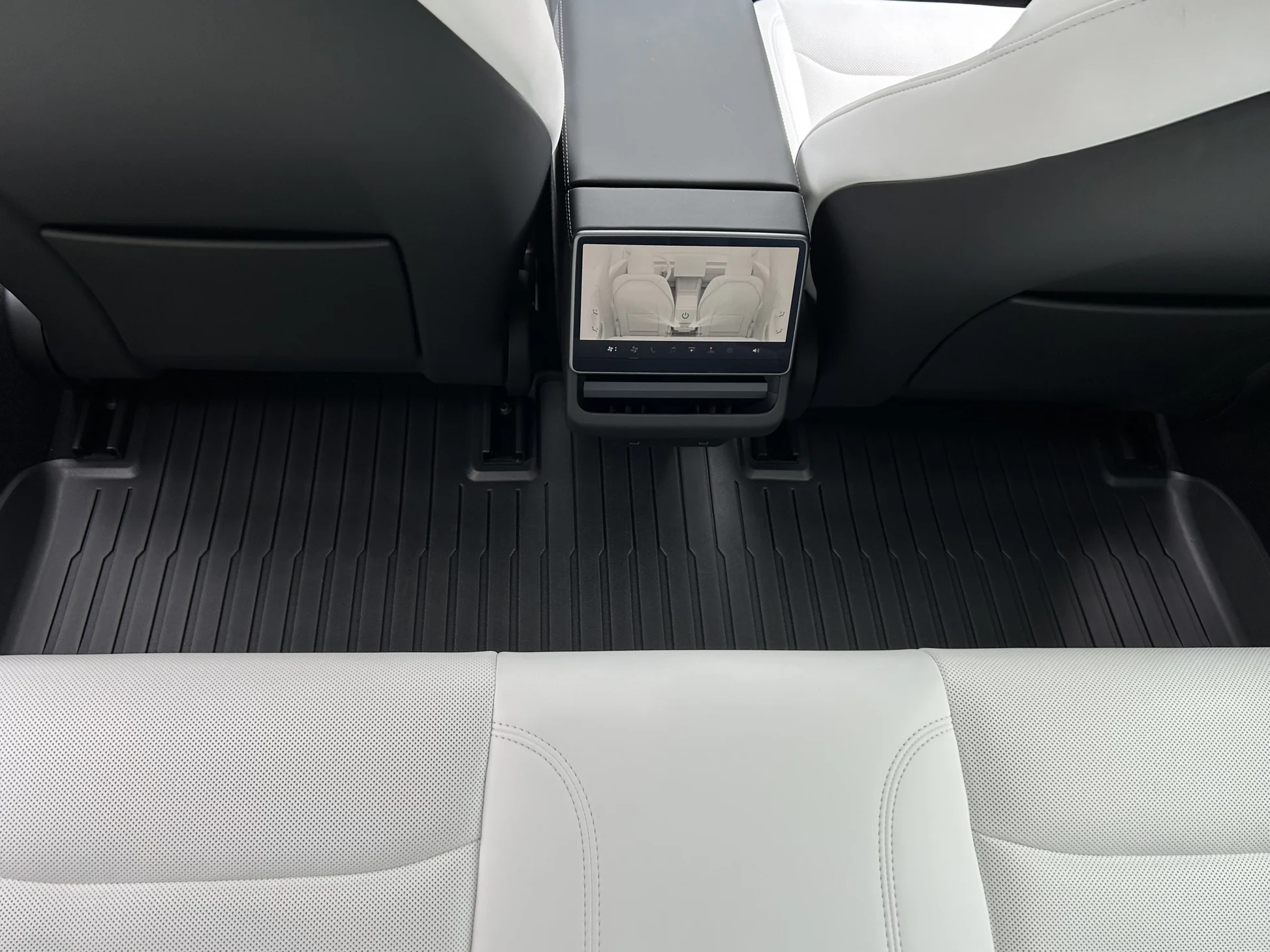
I Build Separate Approval Files for Each Format
I avoid one vague “floor mat” item code. For poly-backed paper, I record finished width and length, paper basis weight, PE backing or coating construction, total appearance, print, pack quantity, and flatness. I inspect for backing separation, weak areas, tears, print problems, and dirty sheets.
For full-adhesive plastic, I record film type, thickness, finished sheet size, adhesive coverage, release or winding construction, perforation, roll count, and removal conditions. I approve a surface list and an application window. I do not extend the claim to untested carpet or storage conditions.
My pre-shipment review checks dimensions, material, visual consistency, count, packing, labels, carton marks, and the agreed functional tests. I keep a signed sample and revision code with the purchase order. If any material, adhesive, paper, print, size, or pack count changes, I require a new approval before the next bulk run.
I use a raw-material selection process and do not use recycled production waste as substitute material. I focus on stable quality, fair value, accurate order quantity, experienced production staff, and flexible lines for large orders. Clear specifications also help me reduce export, receiving, and repeat-order risk without turning a preference into an unsupported guarantee.
| Approval item | My evidence | Risk reduced |
|---|---|---|
| Material and construction | Signed product sample | Unapproved substitution |
| Vehicle trial | Written placement and removal record | Movement, residue, or fit problems |
| Artwork | Final file and revision | Wrong logo or message |
| Pack and dispenser | Complete packed sample | Slow issue or incompatible hardware |
| Inspection plan | Methods and tolerances | Subjective shipment decisions |
I review the base specifications on my car paper floor mats page before I compare protection formats. I then approve the exact construction used in the final order.
I select floor protection by service conditions. Separate trials for movement, moisture, removal, dispensing, and count give me a clearer bulk-buying decision.