A tape edge can look acceptable on the roll yet fail on the vehicle. The wrong backing can add rework, rough lines, or difficult removal.
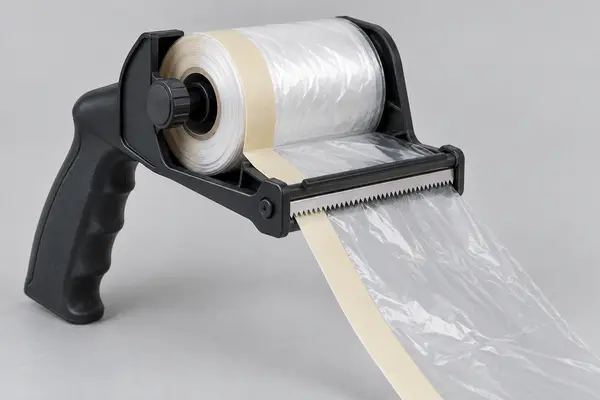
I choose washi-backed pre-taped masking film for thin, precise edges and straight or mild contours. I choose crepe-backed film when I need more stretch around gentle curves. I approve neither by name alone; I test the exact tape, adhesive, film, surface, and drying cycle together.
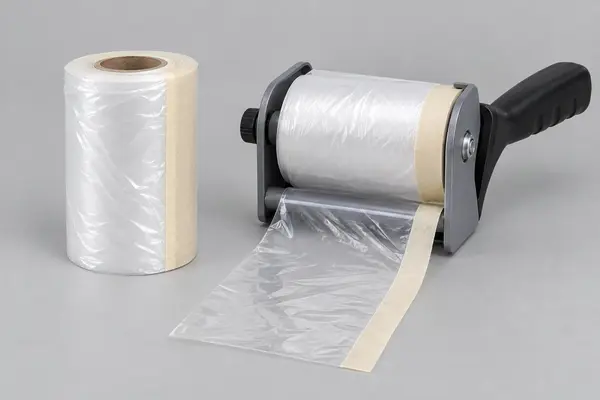
I treat the tape backing as one part of a complete masking system. This decision process helps me compare samples without confusing backing design with adhesive quality or film performance.
Which Tape Backing Fits My Body Shop Work?
A generic “automotive tape” description hides the backing. If I buy on color or price alone, I may receive a product that slows the intended job.
I start with the masking shape and finish requirement. I favor washi for a low-profile edge on straighter work. I favor crepe where controlled stretch helps around a gentle curve. I still require an installed trial because adhesive and construction can change the result.
I Match the Backing to the Masking Path
I first separate straight edge work from contour work. A smooth, thin washi backing can sit flat and help me create a precise boundary along a door, quarter panel, or other mild shape.
I consider crepe backing for gentle curves because its texture can provide useful stretch. I still compare how each proposed roll follows the real curve under normal hand tension.
I never use backing type as a substitute for heat, adhesion, or residue data. I ask for the exact construction, then I prove it on my surfaces and drying cycle.
| My main job condition | My starting choice | What I verify |
|---|---|---|
| I need a thin, straight paint boundary | Washi-backed film | I check edge contact, bleed, tearing, and clean removal |
| I follow a gentle vehicle contour | Crepe-backed film | I check stretch, wrinkles, lift, and paint-edge shape |
| I mask mixed shapes in one repair | I trial both | I choose the backing that gives the most repeatable total process |
| I use heated drying | Neither by name alone | I test the complete tape-and-film roll through the real cycle |
My choice is a starting point. I combine operator feedback with measurable acceptance checks.
How Should I Compare Washi and Crepe Samples Fairly?
An unfair sample test can make one backing look better because its adhesive, width, age, or film fold differs. That comparison gives me the wrong answer.
I compare rolls with the same tape width, film dimensions, storage history, and intended use. I apply them to the same cleaned panels, use the same dwell and drying cycle, then record placement, edge seal, removal, residue, and film behavior.
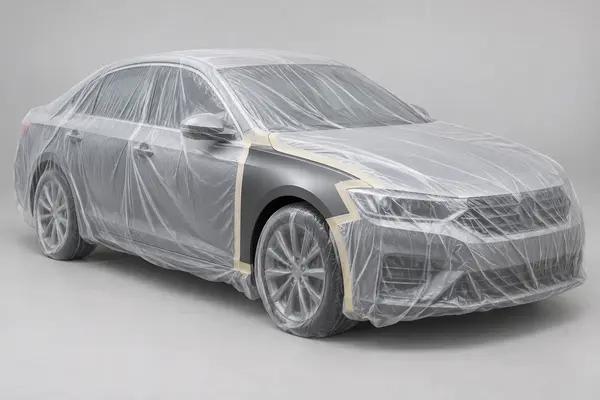
I Run One Controlled Side-by-Side Trial
I label every sample and condition both rolls in the same area. I do not compare a cold roll with one kept at normal shop temperature.
I choose every surface named in my purchasing requirement. I confirm that each surface is fully cured, then I clean both test areas with the same approved method.
I apply equal lengths with normal pressure on a straight section and a required curve. I unfold the film and check whether the tape shifts, wrinkles, or lifts.
I expose both samples to the same paint system, dwell time, and drying process. I remove them at the same angle and steady speed, then record the results.
| My trial step | What I keep equal | What I record |
|---|---|---|
| I prepare the surface | Surface, cleaning method, and cure condition | I record contamination or preparation differences |
| I apply the sample | Tape width, length, pressure, and operator | I record steering, stretch, wrinkles, and initial lift |
| I open the film | Unfolding direction and handling | I record film tearing, blocking, or tape movement |
| I run the process | Coating, temperature, time, and dwell | I record edge lift, bleed, softening, and transfer |
| I remove the mask | Removal time, angle, and speed | I record tearing, residue, paint damage, and edge quality |
I repeat the trial because one strip can hide variation. For deeper adhesion checks, I follow my verified pre-taped masking film adhesion test guide.
What Failure Signs Should I Reject During the Trial?
A sample may stay attached and still be unsuitable. If I only check whether it fell off, I can miss slow application, ragged removal, or paint rework.
I reject a sample when it cannot follow the required path, seals unevenly, lifts during the agreed process, tears excessively, leaves unacceptable residue, damages the surface, or creates an unacceptable paint edge. I define each limit before testing.
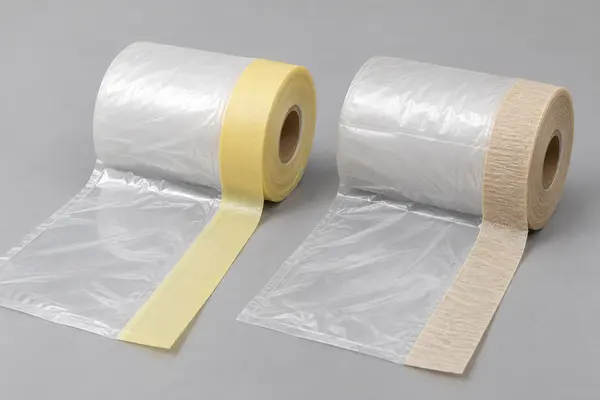
I Separate Backing Problems from Adhesive and Film Problems
I watch the operator steer the tape. Repeated curve wrinkles point me toward conformability or technique. Sliding or lift on a clean flat panel sends me toward the adhesive and surface conditions.
I inspect removal separately. A backing that splits adds labor. A tape that removes in one piece can still fail if it transfers adhesive or pulls at the coating.
I also reject uneven tape-to-film bonding, separation during unfolding, or blocked folds that pull the tape out of line. I do not blame the backing for a film-folding defect.
| What I observe | What I investigate first | My buying response |
|---|---|---|
| The tape wrinkles on a required curve | I check backing stretch, width, and application tension | I compare the other backing or a narrower tape |
| The edge lifts on a flat panel | I check surface preparation, adhesive, dwell, and temperature | I stop approval until the exact cause is controlled |
| The tape tears into fragments | I check backing strength, heat exposure, and removal timing | I reject or repeat only after a documented process change |
| Adhesive remains on the surface | I check adhesive compatibility and exposure conditions | I reject the construction for that tested process |
| The film pulls the tape out of line | I check tape-to-film bonding, fold, and opening direction | I reject the roll design or change the approved handling method |
I photograph repeatable failures and keep the failed sample when practical. This evidence identifies whether I need another backing, adhesive, width, fold, or instruction.
What Should I Put in the Purchase Order?
An approved sample can lose its value when my order says only “pre-taped masking film.” A vague description allows an unintended backing or construction change.
I lock the backing type, tape width, adhesive description, film size, fold, opening direction, process limits, approved sample, packing, quantity tolerance, and inspection method into the order. I require written review before any controlled item changes.
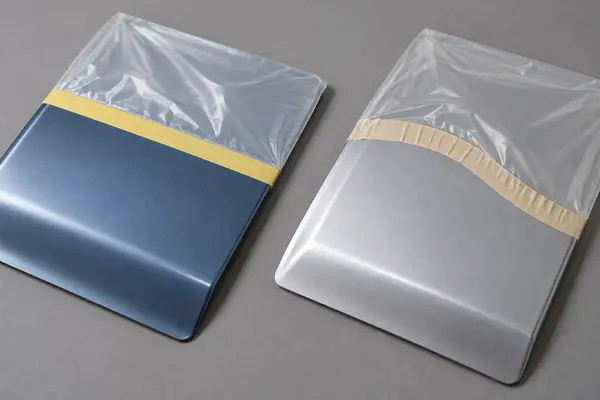
I Turn the Trial Result into a Repeatable Specification
I give each approved construction an item code. I state “washi paper backing” or “crepe paper backing” because I do not treat color as proof of construction.
I attach the approved sample and test record. I list the intended surfaces, exposure, drying cycle, and removal window used for approval. I do not copy another product's temperature claim.
I also define the film material, folded and opened widths, roll length, tape alignment, fold, and opening direction. My pre-taped masking film width guide covers width as a separate stocking decision.
| My controlled field | What I write | Why I control it |
|---|---|---|
| Tape backing | I state washi or crepe paper and the approved supplier code | I prevent an unreviewed backing substitution |
| Tape construction | I state width, adhesive description, and identifying color | I keep the tested combination clear |
| Film construction | I state material, dimensions, fold, bond, and opening direction | I keep application behavior repeatable |
| Process reference | I state surfaces, cycle, dwell, and removal window | I connect approval to the real body shop process |
| Packing and quantity | I state rolls per pack, packs per carton, labels, and tolerance | I reduce receiving and inventory errors |
| Change control | I require written notice and a new sample when needed | I stop silent changes before a bulk shipment |
I use a raw-material selection process and do not use recycled production waste as substitute material. I still use an approved sample and receiving inspection to support stable quality.
I choose the backing for the real masking path, prove the complete roll under shop conditions, and turn that result into one controlled purchasing specification.