
I see small heel-pad choices create large order problems: poor appearance, awkward foot feel, weak attachment, and costly complaints across an imported car-mat program.
I choose a flexible polymer heel pad for most high-use programs, matching carpet for a discreet premium look, and metal only for style-led ranges after checking edges, attachment, and pedal clearance in the target vehicle.
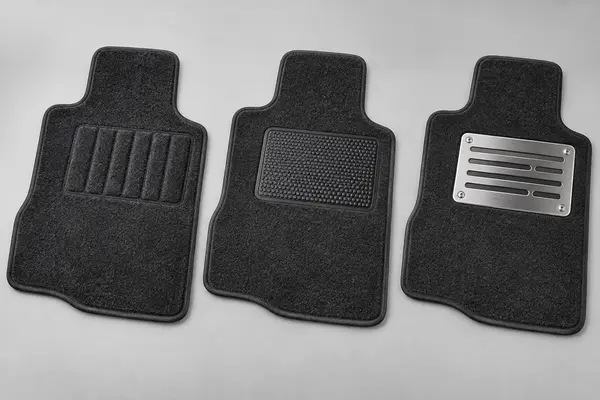
I treat the heel pad as a separate specification, not a decorative extra. That simple change helps me compare samples clearly and approve the right option for each sales program.
Which Heel-Pad Material Fits My Sales Program?
I can choose a good-looking pad that performs poorly in the buyer's real market. That mismatch becomes expensive after the finished sets arrive.
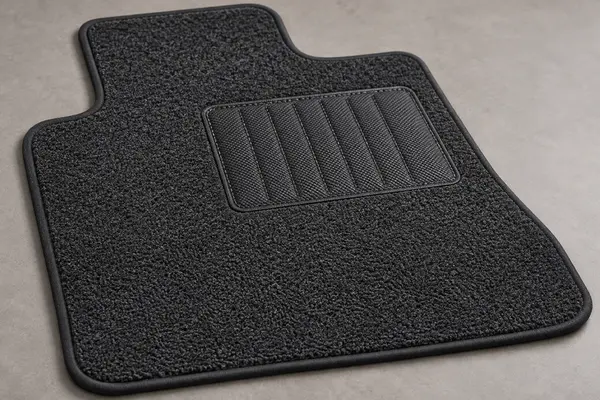
I match the material to use level and brand position. I usually shortlist matching carpet for visual continuity, flexible polymer for practical wear protection, and metal for a strong design statement that justifies closer fit and edge checks.
I Start With Use, Not Appearance
I first define where the mats will sell and how customers will use them. A dealership accessory program, a replacement range, and a premium private-label line do not need the same answer. This keeps a stylish sample from becoming the wrong bulk choice.
Matching carpet gives me the quietest visual result. It can suit a premium interior range when color and texture continuity matter most. I still specify the patch construction, edge finish, and attachment because “same carpet” alone does not define a complete heel pad.
A flexible polymer pad gives me a clear protective surface and an easy-to-see wear zone. I request the stated compound instead of accepting “rubber style.” I compare flexibility, texture, edge profile, odor in the received sample, and appearance after cleaning.
A metal plate can support a sport or styling range. I use it selectively because a rigid part changes weight, foot feel, and attachment needs. I reject sharp corners, loose hardware, or an intrusive raised position.
| Heel-pad choice | Program I would consider | Main sample question |
|---|---|---|
| Matching carpet | Premium or understated interior range | Does the patch protect the wear area without looking added on? |
| Flexible polymer | Daily-use, dealer, or replacement range | Is the pad flexible, secure, cleanable, and comfortable? |
| Metal | Style-led or sport-positioned range | Are edges, height, and fixings acceptable in the installed mat? |
I do not call one material universally best. I state the intended use and reject samples that cannot meet it.
What Sample Details Should I Compare Between Materials?
Two pads can share a material name yet differ in thickness, texture, edge shape, color, and attachment. A vague comparison hides those differences.
I compare finished samples with one written sheet. I record material identity, visible size, profile, texture, color reference, attachment method, edge treatment, finished mat weight, and the exact driver-mat template used.
I Use One Comparison Sheet
I request each shortlisted heel-pad construction on the intended carpet, backing, and binding combination. A loose pad does not show how the completed mat bends or meets the pile. A picture cannot confirm feel, stiffness, or attachment quality.
I do not copy dimensions from a different vehicle. The visible pad must cover the intended contact area on the approved driver mat. I record overall thickness and any raised features. I want useful coverage without crowding the mat edge, retention points, or pedal area.
Color needs its own reference. “Black” can look blue, glossy, or gray beside dark carpet. I compare the pad and carpet together under normal interior light. I check carpet direction, polymer gloss, or metal finish without treating appearance as proof of material performance.
| Field | What I record | Why I record it |
|---|---|---|
| Material | Declared material or construction | Prevents unlike samples from sharing one vague name |
| Visible dimensions | Length, width, and corner shape | Controls coverage and appearance |
| Profile | Base thickness and raised features | Helps me compare foot feel and clearance |
| Attachment | Stitching, bonding, fasteners, or combined method | Defines how the pad joins the mat |
| Surface | Texture, gloss, and approved color reference | Keeps repeat orders visually consistent |
| Placement | Coordinates on one named driver-mat template | Prevents a centered but ineffective pad |
I keep wider material, template, retention, branding, and packing decisions in a separate OEM wool car mat specification. Here I stay focused on heel-pad material.
How Do I Validate Comfort, Attachment, and Wear?
A neat bench sample can still feel wrong or move badly in a vehicle. If I skip installation, I approve only its appearance.
I install the complete driver mat in the exact vehicle, check normal pedal movement and heel contact, then repeat simple bend, edge, attachment, cleaning, and comparison checks against the signed sample.
I Run a Repeatable Installed-Sample Review
I begin with the correct vehicle identity, driving side, template revision, and retention layout. I secure the mat and never stack it over another mat. I operate the accelerator, brake, and clutch where fitted, checking that the mat and pad remain clear.
Next, I look at where the heel rests. One generic coordinate can misplace a well-made pad across several templates. I mark the observed contact zone and note any hard edge or high rib that affects movement between pedals.
I flex the finished mat to find sharp hinging. I inspect stitching for gaps, loose ends, and puckering. I check bonded edges for lifting and mechanical fasteners for unwanted hard points underneath.
I treat cleaning checks as comparisons, not lifetime claims. I use the agreed method, let each sample dry, and compare its shape, surface, edges, and attachment with the retained reference.
| Check | My method | Reject signal |
|---|---|---|
| Installed clearance | Operate all pedals with the mat retained | Any contact, obstruction, lifting, or migration |
| Heel-zone coverage | Observe normal foot positions | Heel repeatedly lands outside the protected area |
| Flex review | Bend the complete mat in handling directions | Cracking, sharp hinging, or edge separation |
| Attachment review | Inspect the entire pad perimeter and underside | Loose stitch, lifting edge, or exposed hard point |
| Cleaning comparison | Use the agreed method and compare with reference | Unaccepted change in shape, finish, or attachment |
I record the sample, vehicle, date, and result so my team can compare the same construction later.
What Should I Put in the Bulk Order Specification?
Sample approval can disappear when the purchase order only says “heel pad included.” Production then has no single reference for the accepted construction.
I attach a heel-pad specification to the purchase order. It identifies the approved material, dimensions, position, profile, color, attachment, driver-mat template, signed sample, inspection points, packing protection, and change-control rule.
I Turn the Approved Sample Into an Order Standard
I assign each heel-pad construction a separate item code. A carpet pad, flexible polymer pad, and metal plate never share one description. I connect the code to the vehicle template and driving side because placement can change.
I include a drawing or approved photograph with dimensions measured from stable points on the pattern. I name the attachment and edge requirement. The signed sample controls color, texture, gloss, and feel. Any material, attachment, or profile change requires a new approval.
My inspection plan checks item code, driver mat, position, dimensions, surface, edges, attachment, and packing. I agree the sampling plan and acceptance rules with the buyer before production.
Metal parts or raised surfaces may need packing separation so they do not mark another mat. I approve one packed sample and keep set quantities separate from heel-pad counts to prevent shortages.
| Purchase-order field | My required reference |
|---|---|
| Heel-pad item code | One code for one approved construction |
| Driver-mat link | Vehicle, model year, driving side, and template revision |
| Material and finish | Written identity plus signed visual/feel sample |
| Dimensions and position | Approved drawing with stable reference points |
| Attachment and edges | Named method and acceptable finished condition |
| Change control | New approval before any material or construction change |
| Inspection and packing | Agreed checks, sampling rule, and packed reference |
I use a raw-material selection process and do not use recycled production waste as substitute material. I focus on stable quality, fair value, order quantity accuracy, and export-risk reduction. A signed standard gives every team one approved decision.
I review the broader carpet car floor mat range after choosing the heel-pad direction. I still approve the exact finished driver-mat sample for every bulk program.
I choose heel-pad material by sales use, prove it on the installed driver mat, and lock the approved construction into one clear purchase-order standard.