
An oversized carton can block storage and tie up stock, while a small carton can create constant replenishment work and unexpected shortages.
I choose 500-count paper floor mat cartons for lower or less predictable usage, limited storage, and multiple designs. I choose 1,000-count cartons for steady high-volume lanes with enough clean storage. I compare delivered cost, handling, damage risk, and verified piece count before approving either option.
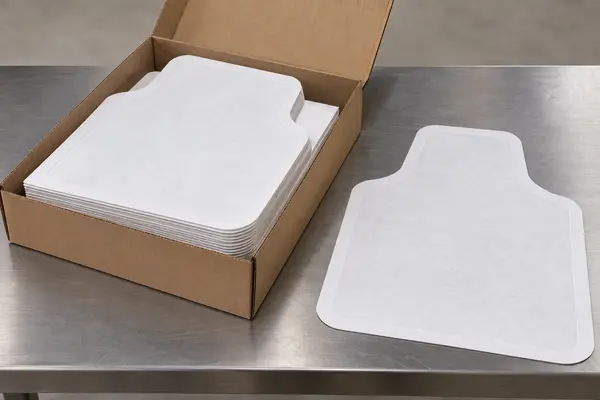
The printed carton quantity is only useful when it matches the dealership's real service flow and the supplier can verify every shipment consistently.
How Do I Match Carton Count to Actual Service-Lane Usage?
Buying from a monthly guess can leave one branch short while another branch holds dusty cartons that move too slowly.
I start with actual mat consumption by location and calculate how long one 500-count or 1,000-count carton will last. I add a controlled reorder buffer, compare busy and slow periods, and choose the count that supports normal replenishment without hiding excess stock.
I calculate coverage days before comparing quotations
I collect several weeks of issue or service-order data when it is available. I count how many paper mats each lane uses on an ordinary day, a busy day, and a slow day. I also check whether one vehicle uses only a driver-side mat or whether the process sometimes uses two pieces. A repair group with several branches needs separate usage records because one combined average can hide local shortages.
I divide the stated carton count by expected daily use to estimate coverage days. I then consider delivery time, internal transfer time, order frequency, and the buffer policy. I do not use one universal safety-stock percentage because purchasing risk differs by location. I agree on the buffer with the buyer and record it beside the calculation.
A 500-count carton often gives me more flexibility when volume changes, storage is tight, or several printed designs share demand. A 1,000-count carton can reduce replenishment events when one high-volume location uses the same mat steadily. I still compare the delivered quotation because a larger carton is not automatically the best total-cost option.
| Usage condition | My starting option | What I confirm |
|---|---|---|
| Low or irregular volume | 500-count carton | Coverage days and reorder trigger |
| High, steady volume | 1,000-count carton | Storage space and lifting method |
| Several custom designs | 500-count cartons by SKU | Minimum quantity and label accuracy |
| Central warehouse distribution | Either count | Branch issue units and transfer frequency |
I make the decision from measured consumption, not from the biggest carton offered.
How Do Storage and Handling Change the Better Carton Size?
A carton can look efficient on a price sheet yet arrive too heavy, too large, or too vulnerable for the receiving area.
I check the packed carton dimensions, gross weight, sheet orientation, stacking plan, shelf opening, and normal handling route. I approve the larger count only when staff can receive, store, open, and dispense it without bending mats or exposing unused stock.
I test one complete packed carton in the real workflow
I ask for the finished carton dimensions and gross weight before ordering. I compare them with pallet positions, shelf depth, doorways, receiving carts, and the space beside each service lane. If a carton must be opened in a dusty or wet area, I decide whether the inner protection can keep the remaining mats clean.
Paper sheets can curl, crease, absorb moisture, or collect dirt when a large carton stays open too long. I inspect the top, middle, and bottom of a packed sample. I look for crushed corners, wavy edges, surface marks, blocked sheets, and print transfer. I also confirm that the stack can be lifted or divided without dragging the printed face across the carton.
The physical format remains a separate decision from the count. A 500-count carton can hold flat or folded mats, and a 1,000-count carton can do the same. If storage layout makes format important, I use my flat-versus-folded paper floor mat guide alongside this carton-count decision.
| Handling point | My check | Risk I avoid |
|---|---|---|
| Receiving | Carton size, weight, and condition | Difficult unloading or hidden crushing |
| Storage | Shelf fit, stacking, and dryness | Edge damage and moisture exposure |
| Opening | Liner, flap, and first-sheet access | Contamination and torn top sheets |
| Dispensing | Easy single-sheet removal | Double pulls and bent mats |
| Long-open carton | Protection for remaining stock | Dust, curl, and print damage |
I choose the carton that stays usable through its full open life, not only the carton that uses less warehouse space per sheet.
How Do I Verify 500 or 1,000 Mats Are Actually in the Carton?
A printed quantity can be wrong when stacks vary, inner bundles are missing, or an unchecked packing change reaches bulk production.
I verify quantity with a documented packing structure, sample carton counts, bundle labels, carton weight comparison, and lot traceability. I never treat carton weight alone as proof because paper weight, coating, moisture, and packaging can change the total.
I combine direct counting with supporting controls
I define the packing structure first. A carton may contain one loose stack, several wrapped bundles, or divided layers. I state the pieces per bundle, number of bundles, total pieces, and permitted quantity difference. If the order requires exact counts, I write that requirement directly rather than relying on a general phrase such as “about 1,000.”
For approval, I open selected cartons from different parts of the finished lot. I directly count complete cartons or count sealed bundles whose individual quantity has already been verified by the agreed method. I record the carton number, bundle count, sheet count, gross weight, and any damaged or unusable pieces separately.
Carton weight can help me find an abnormal carton after I establish an approved weight range from correctly counted packed samples. It does not replace counting. A heavier paper grade or extra liner can make a short carton look normal, while moisture can make it look heavy. I also compare carton labels with the purchase order and packing list so a 500-count SKU cannot be mixed with a 1,000-count SKU.
| Control | Evidence I keep | Limitation |
|---|---|---|
| Direct piece count | Count sheet and carton ID | Takes more inspection time |
| Verified inner bundles | Bundle labels and spot counts | Requires stable bundle packing |
| Gross-weight comparison | Approved packed-carton reference | Cannot prove quantity alone |
| Carton and SKU labels | Photos and packing list | A correct label can cover a wrong count |
| Cross-carton sampling | Lot and pallet locations | Must follow the agreed sampling plan |
I separate missing pieces from damaged pieces because both reduce the usable quantity received.
What Do I Put in the Purchase Order and Reorder Plan?
An approved first carton can still drift when a reorder changes paper, bundles, labels, or quantities without a controlled reference.
I state the exact carton count, inner packing, finished mat construction, usable-piece rule, count method, carton dimensions, weight reference, labels, sampling plan, and change triggers. I give each 500-count and 1,000-count option its own SKU.
I make every quantity claim traceable
I identify the product as a disposable automotive paper floor mat, then record finished dimensions, paper construction, coating or backing, print version, orientation, and packing format. The carton-count decision does not replace those product fields. It sits beside them.
I state whether the carton contains 500 or 1,000 usable pieces and whether any inner bundles are required. I define the carton label text, barcode or SKU, production or lot reference, and destination marks. I also record the count-verification process and what happens when a sampled carton is short.
For repeat orders, I compare consumption and shortage records before keeping the same carton count. A branch that has grown may need a larger replenishment unit. A program with more designs may need smaller cartons even when total volume rises. I review the decision instead of treating 1,000 as an automatic upgrade from 500.
| Purchase field | My required entry |
|---|---|
| Carton quantity | 500 or 1,000 usable mats |
| Inner structure | Bundles, pieces per bundle, and protection |
| Product identity | Size, paper, backing, print, and format |
| Carton data | Dimensions, gross weight reference, and SKU |
| Inspection | Sampling, count method, and shortage action |
| Reorder review | Usage rate, storage, lead time, and design mix |
I review available constructions on the paper car floor mat product page, then approve the exact carton sample. I focus on stable quality, fair value, quantity accuracy, and export-risk reduction.
I choose 500 or 1,000 mats from real usage, storage, handling, and count control so each carton supports service work instead of creating hidden stock problems.