
Seat covers that slide or bunch can slow service work and weaken the customer impression. Buying only by film thickness may hide the real construction difference.
I choose between single-layer and dual-layer disposable car seat covers by testing fit, entry and exit, surface movement, tear behavior, removal, packing efficiency, and cost per protected vehicle. Single-layer covers suit simple short jobs; dual-layer designs can improve grip and technician movement when their layers work together.
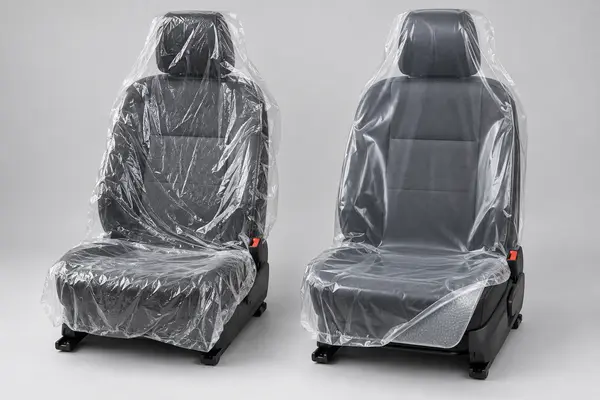
I compare the two constructions as complete service products because the cheapest roll or the thickest film does not automatically give the best daily result.
What Changes Between Single-Layer and Dual-Layer Seat Covers?
Two clear covers can look almost identical in a carton. If I do not confirm the construction, I may compare products that behave differently on the seat.
I treat a single-layer cover as one film doing every job. In a dual-layer design, I expect a smoother entry surface and a higher-grip seat-contact surface, but I verify the actual sample.
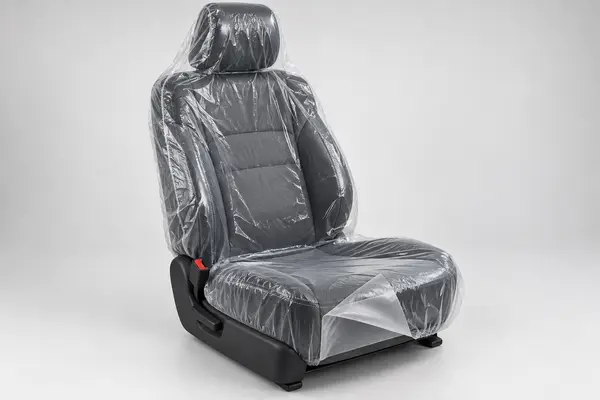
I Compare Functions Instead of Marketing Names
I start by confirming what the supplier means by single-layer or dual-layer. A single-layer cover uses one film structure across the product. Its feel, slip, grip, strength, and clarity come from that structure and its surface finish.
A dual-layer cover places two functional surfaces together. The exposed side can be smoother so a technician can sit down and stand up without pulling the cover sharply. The seat-contact side can have more grip so the cover is less likely to move on leather or fabric. I do not assume every two-layer product creates this result. Layer materials, thickness balance, surface texture, joining consistency, dimensions, and fit all affect handling.
Terms such as premium, non-slip, or heavy duty do not tell me whether the product has one layer, a co-extruded structure, two joined films, or another design. I ask for a plain construction description and a physical sample. I then compare the sample on actual automotive seats instead of judging loose film by hand.
| Construction point | Single-layer cover | Dual-layer cover |
|---|---|---|
| Film structure | One structure performs all functions | Two surfaces can serve different handling needs |
| Seat contact | Depends on fit and one surface finish | Grip-facing layer can reduce movement in a suitable design |
| Entry surface | Same film face used throughout | Smooth outer layer can support easier entry and exit |
| Sample concern | Fit or texture may allow shifting | Layers may separate, wrinkle, or behave inconsistently |
| Buying focus | Dimensions, finish, strength, pack value | Layer identity, joining quality, orientation, and complete fit |
How Do I Test Slip, Grip, and Entry or Exit?
A cover can feel stable when empty but shift when someone enters the vehicle. A quick photo cannot show bunching, noise, tearing, or removal behavior.
I test both designs on representative cloth and leather seats with the same operators and movements. I score installation, seated movement, repeated entry, cover position, damage, and clean removal separately.
I Use the Same Service-Lane Sequence for Every Sample
I choose seats that represent the dealership's common vehicles, including different cushion widths, backrest shapes, and headrest positions. I confirm that the temporary cover does not block seat belts, controls, or any area the vehicle maker says must remain clear. I do not treat a universal label as permission to ignore vehicle-specific safety instructions.
I condition all sample rolls in the same room and install equal-size covers using the normal staff method. I record how easily the cover opens, which face contacts the seat, and whether the operator can find the correct orientation.
I run the same entry, seated adjustment, steering reach, exit, and re-entry sequence for each sample. I note forward slide, sideways movement, bunching at the seat crease, film noise, sticking to clothing, and stress around the headrest and cushion corners. I inspect for holes, stretched areas, separated layers, or exposed upholstery. Finally, I remove the cover without letting its outer surface brush the seat and record whether it lifts cleanly.
| Test step | What I record | Failure sign I watch for |
|---|---|---|
| Installation | Opening time, orientation, fit | Twisting, wrong face, incomplete coverage |
| Initial seating | Reference-point movement | Immediate sliding or deep bunching |
| Repeated entry | Position after each cycle | Cover pulls off the backrest or cushion |
| Seated adjustment | Noise, drag, clothing contact | Film sticks strongly or gathers under the operator |
| Inspection | Tears, layer condition, exposed areas | Holes, separation, or uncovered upholstery |
| Removal | Control of the used outer face | Dirty surface touches the protected seat |
Which Construction Fits My Dealership Workflow?
One design may work well in a quick inspection lane and poorly in a repair process with repeated vehicle movement. A single rule can create avoidable cost.
I match construction to entry cycles, job duration, seat materials, vehicle mix, protection risk, staff handling, pack space, and cost per usable cover. I keep exceptions visible.
I Segment Jobs Before I Standardize the SKU
I begin with workflow records. A cover used once during a short intake check has a different task from a cover left in place while a vehicle moves between inspection, repair, detailing, and quality control. Repeated entry and exit can make surface movement more important. A low-contact job may place more value on simple dispensing and compact storage.
I compare cost per protected vehicle, not only cost per roll. My calculation includes pieces per roll or carton, damaged pieces found during opening, covers replaced during a job, installation time, and any extra cleanup caused by movement. I do not invent savings before the trial. I use the dealership's own sample results and job mix.
I may choose one standard construction for most work and a second option for demanding lanes. If a single-layer product passes the fit and movement test, I do not reject it merely because it is simpler. If a dual-layer product controls movement better, I confirm that it opens consistently and that the layers remain joined. My earlier comparison of embossed and smooth disposable plastic seat covers helps me keep surface texture separate from layer count.
| Dealership workflow | Construction I trial first | Reason for my choice |
|---|---|---|
| Short intake or inspection | Qualified single-layer design | Simple handling may meet the limited cycle need |
| Repeated technician entry | Dual-layer design | Separate grip and slip surfaces may control movement |
| Mixed cloth and leather fleet | Both constructions | Seat material can change the result |
| Tight storage or mobile service | Compact qualified option | Roll and carton space matters with performance |
| High soil-risk repair work | Best full-workflow performer | Replacement and cleanup risk matter more than label |
What Do I Put in the Bulk Purchase Specification?
If my order says only plastic seat cover, a supplier can change dimensions, surfaces, or packing while still using the same general product name.
I specify construction, materials, each layer's function, finished size, thickness basis, surface orientation, joining method, opening style, perforation, piece count, carton data, labeling, sample reference, and inspection method.
I Make the Approved Difference Checkable
For a single-layer cover, I identify the material, surface finish, finished length and width, thickness measurement basis, opening position, and shape. For a dual-layer cover, I add the material or description for each layer, the intended smooth and grip faces, the way the layers are joined, and the orientation staff should see when they pull a cover from the roll or box. I ask the supplier to confirm whether the stated thickness describes one layer, combined construction, or another measurement basis.
I write pieces per roll, rolls per carton, total pieces, perforation expectations, core dimensions, presentation, and label wording. My guide to rolls versus folded boxes for disposable car seat covers helps me test dispensing separately from the film construction.
I attach a dated sample or reference code and the dealership's test sheet. The sheet records seat types, installation method, entry sequence, movement checkpoints, damage inspection, and removal result. From a manufacturer position, I use a raw-material selection process and do not use recycled production waste as substitute material. I focus on stable quality, fair value, order quantity accuracy, export-risk reduction, experienced production staff, and flexible production lines for large orders. I still rely on the written specification and approved sample to guide production and receiving checks.
| Purchase field | What I state | What I verify |
|---|---|---|
| Construction | Single layer or defined dual-layer design | Sample structure matches the order |
| Surface orientation | Seat-contact and operator-facing sides | Cover dispenses in the intended direction |
| Finished product | Size, shape, opening, thickness basis | Measurement and vehicle fit |
| Layer joining | Agreed method and expected condition | No unwanted separation in the trial |
| Packing | Pieces, rolls, cartons, core, perforation | Counts and dispensing workflow |
| Approval control | Sample code, test sheet, revision | Bulk goods match the accepted version |
I choose single-layer or dual-layer seat covers only after a real workflow test. A clear specification keeps the approved fit, movement, and packing result consistent in bulk buying.