
A seat cover can fit yet still slide, cling, or tear during service. Poor surface choice wastes covers and weakens the clean handover customers expect.
I choose embossed film when buyers need more surface texture and easier separation, and smooth film when they prefer a cleaner look and compact packing. I approve either option only after checking material, thickness, dimensions, fit, tear behavior, packing, and trials on real seats.
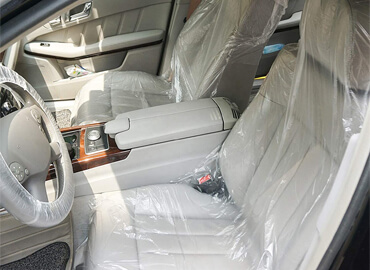
I treat surface finish as part of the full seat-cover specification, because it affects workshop handling and vehicle handover.
How Do I Compare Embossed and Smooth Film?
Two clear seat covers can look almost identical in a photo, yet their surfaces may handle very differently. A label alone does not show that difference.
I compare the finishes by touch, opening behavior, seat contact, clarity, and removal. Embossing can help separate thin film layers and add texture. Smooth film can give a cleaner visual surface. Neither finish is automatically stronger or better for every dealership.
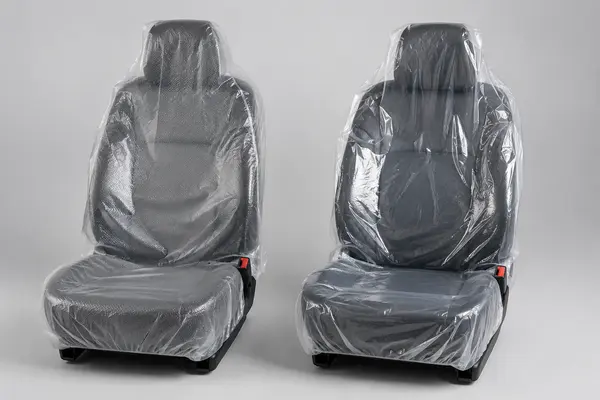
I treat texture as one variable, not a quality grade
I start by asking how the cover will be handled. A technician may pull one cover from a roll, open it quickly, fit it over a seat, enter the vehicle, and remove it after service. I want the film to separate without a long search for the opening. I also want the cover to stay in a useful position without creating too much resistance when the technician enters or leaves.
Embossed film has a fine raised pattern. I often consider it when easy layer separation and a less flat surface feel are important. Smooth film has no added texture pattern. I may consider it when a buyer wants a clear, simple appearance or needs the cover to pack in a particular way. The exact result still depends on the resin, film gauge, surface treatment, dimensions, folds, and seat shape.
| Decision point | What I check on embossed film | What I check on smooth film |
|---|---|---|
| Opening | I time how easily I find and separate the opening | I check whether thin layers cling together |
| Seat contact | I watch movement during entry and exit | I watch sliding and bunching on the cushion |
| Appearance | I review how the texture looks over dark upholstery | I review clarity, reflections, and wrinkles |
| Removal | I check whether texture catches on seat details | I check whether the film clings during removal |
| Packing | I compare roll diameter or folded pack volume | I compare the same values at equal specifications |
I do not accept a broad claim such as “non-slip” without defining a test. Different upholstery surfaces can change the result.
Why Do I Check Fit and Thickness Separately?
A textured cover may feel substantial while still being too small or too weak. That false impression can hide the real cause of field complaints.
I specify finish, material, thickness, dimensions, and opening as separate fields. I never use embossing as a substitute for film strength or proper fit. A good sample must cover the headrest, seat back, and cushion without excessive tension at the corners.
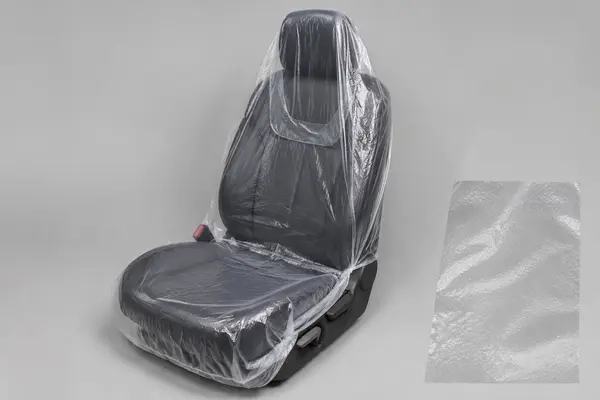
I separate surface feel from structural performance
I first confirm whether the film is LDPE, HDPE, or another agreed material. I also define how thickness will be stated and measured. I ask for the same method on samples and production orders.
I also check the usable width and length after opening. A wide cover can fit poorly if its opening, side seams, or headrest section are wrong. A narrow cover may pull tightly across the seat shoulders and tear at a corner. I use my seat-cover thickness and size specification as a starting point, then I confirm the buyer's vehicle range.
I evaluate the cover on several seat shapes. I include a compact-car seat, a wider SUV seat, and any unusual seat that appears often in the dealership group. I note where the film stretches, gathers, or leaves upholstery exposed. I also check whether the bottom edge reaches far enough around the cushion to remain useful during normal workshop movement.
I use my raw-material selection process for consistent production inputs, and I do not use recycled production waste as substitute material. I still rely on an approved sample and written tolerances, because a material statement alone does not define fit or handling.
How Do I Test Both Surfaces Before a Bulk Order?
A quick desk inspection can miss sliding, clinging, and tearing that appear only inside a vehicle. Skipping a service trial moves the risk into the bulk order.
I run a side-by-side trial under the same conditions. I use equal dimensions and thickness where possible, label each sample, and record opening time, installation, movement, removal, visible damage, and technician comments. I repeat the test on more than one seat surface.
I use a simple repeatable sample trial
I begin with unopened samples from both options. I check whether the perforation tears cleanly if the cover comes on a roll. I then open each cover without using tools. I record layers that are difficult to separate, because that delay becomes important when a service department handles many vehicles each day.
After installation, I sit in the seat and exit in the same way for each sample. I do not use an aggressive movement that would not happen in normal service. I look for bunching at the cushion, movement at the seat back, and stress near the opening. I repeat the trial with clean workwear and then with a lightly contaminated test cloth, without claiming that the cover can resist every workshop substance.
| Trial step | What I record | Why I record it |
|---|---|---|
| Dispensing | I record clean separation and perforation quality | I want predictable one-cover use |
| Opening | I record time and layer cling | I want practical handling speed |
| Fitting | I record coverage and tension points | I want to find size-related tears |
| Entry and exit | I record movement, bunching, and noise | I want evidence from normal use |
| Removal | I record snagging and contact with upholstery | I want a clean handover process |
| Waste review | I count unusable or double-dispensed pieces | I want a fair cost comparison |
I do not select the sample with the lowest unit price before this review. I compare usable covers per carton, trial waste, staff handling, and storage. If roll and folded formats are both under consideration, I also use my roll-versus-folded seat-cover guide to keep the packing choice separate from the surface choice.
What Do I Put in the Purchase Specification?
If an order says only “clear embossed seat cover,” two parties can imagine different products. That gap can produce disputes after packing and shipment.
I write one specification that identifies the product, film, surface, dimensions, tolerances, opening, packing, artwork, sample reference, and inspection method. I attach clear photos of the approved cover and keep unrelated protection products out of the file.
I make the approved sample the reference
I begin the purchase sheet with the exact product name: disposable plastic automotive front-seat cover. I state “embossed” or “smooth” as a controlled finish, not as a marketing phrase. If I need a particular embossing pattern or depth, I approve a physical sample instead of relying on a vague description. I identify which side of the film faces the seat if that matters to the design.
I then record material, transparency, thickness, tolerance, finished dimensions, opening position, seam design, and any headrest pocket. I add the dispensing format, piece count, carton count, carton marks, and barcode needs. For printed covers, I specify the artwork version, position, and color reference separately.
| Specification field | What I write | Approval evidence I keep |
|---|---|---|
| Product identity | I state disposable plastic automotive seat cover | I keep a full-cover photo |
| Surface | I state embossed or smooth | I keep the signed surface sample |
| Film | I state agreed material, thickness, and tolerance | I keep measurement records |
| Fit | I state open dimensions and construction | I keep photos on target seats |
| Dispensing | I state roll or folded format and piece count | I keep an opened pack sample |
| Printing | I state artwork version and placement | I keep an approved print proof |
| Carton | I state count, marks, and packing method | I keep the approved packing sheet |
I ask for order quantity accuracy and clear carton counts to reduce export and receiving risk. I focus on stable quality, fair value, and practical risk reduction. My experienced production staff and flexible production lines support large orders, but I still want every requirement written before production.
I also keep the final approval connected to the relevant product family. Buyers can review my automotive plastic seat-cover range for context, but the signed specification remains the controlling order document.
I choose the surface only after a fair side-by-side trial. A precise sample, fit check, and written specification turn embossed or smooth film into a controlled buying decision.