
Choosing a cup by unit price alone can hide contamination, cleaning labor, solvent use, and inconsistent shop practice. Those gaps can make every paint mix harder to control.
I choose disposable paint mixing cups for frequent color changes or strict contamination control. I consider reusable cups only when the cup is designed for reuse and my shop has a validated cleaning, drying, inspection, and traceability process. I compare total cost per usable mix, not cup price alone.
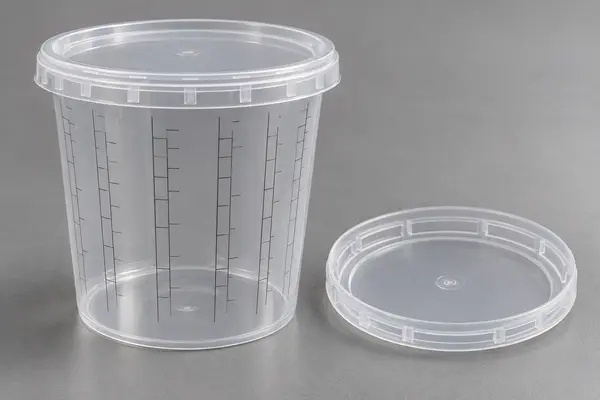
I make this decision from the real mixing process. One simple workflow standard is more useful than a vague rule to reuse whatever looks clean.
Which Cup System Fits My Paint-Room Workflow?
A cup policy can fail when I apply one rule to every coating, repair size, and shift. The team then makes its own decisions at the bench.
I use disposable cups when jobs change often or a fresh contact surface matters most. I assess reusable cups for stable, repeatable work only after I approve the cup, coating contact, cleaning method, drying time, and inspection rule.
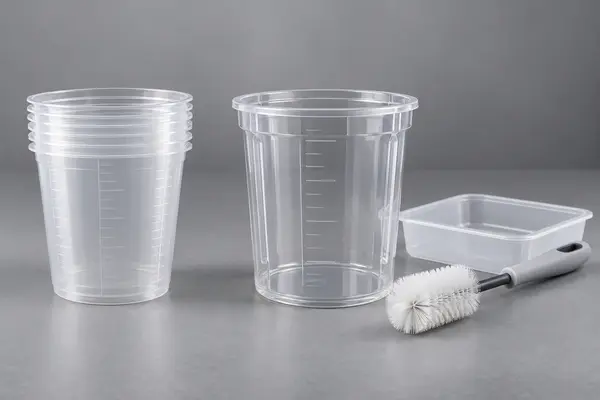
I Match the Cup to the Mixing Pattern
I map weekly mixes. I record coating families, color changes, batch sizes, urgent remixes, and time between jobs. This keeps the purchase decision connected to work.
For frequent color changes, I usually favor a fresh disposable cup. It gives me a clear starting condition and removes the question of what remained from the previous mix. A reusable cup may suit a stable workflow, but only if its manufacturer intends it for repeated use and the cup remains compatible with the coating and cleaning process.
I do not treat “reusable” as a promise that one cup suits every material forever. I set a defined service rule and reject cups with damage, staining that prevents inspection, distorted rims, or unreadable graduations.
| My workflow condition | My likely starting choice | What I verify before approval |
|---|---|---|
| Frequent color or coating changes | Disposable cup | Material compatibility, markings, lid fit, and stock flow |
| Repeated mixes of one approved system | Reusable cup may fit | Intended reuse, cleaning method, drying, inspection, and traceability |
| Mixed repair types and several shifts | Controlled two-system policy | Clear job rules, separate storage, labels, and training |
| No stable cleaning process | Disposable cup | Waste handling and reliable replenishment |
I write the use case before I request samples. That prevents a durable-looking cup from being approved without a workable shop process.
How Do I Control Contamination and Cleaning Risk?
A reused cup can look clean while residue remains near the rim, base, or printed scale. One weak cleaning step can affect the next mix.
I treat a fresh disposable cup as a new contact surface, not proof of universal compatibility. For a reusable cup, I validate cleaning and drying with the intended coatings, then inspect the cup before every approved reuse.
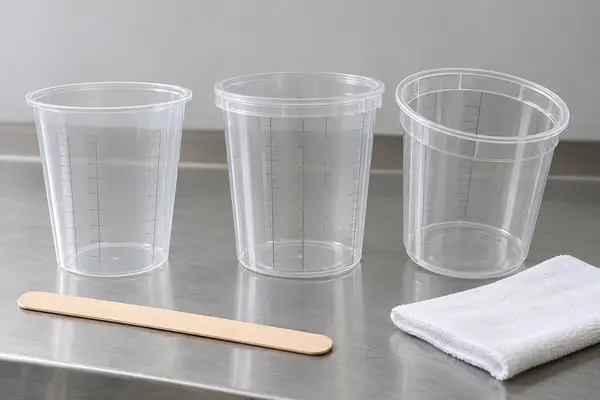
I Test the Complete Contact Cycle
I test both options with the real coating system and normal contact time. For a disposable cup, I check the raw material, inner surface, scale readability, rigidity while filled, pouring control, and lid interface when a lid is required. My separate guides explain how I verify ratio markings and check lid fit.
For a reusable cup, I add the complete cleaning cycle. I record when cleaning begins, the approved cleaning agent, the tools used, rinse steps, drying position, and inspection point. I look closely at the base corner, rim, graduation area, and any surface scratches. I do not allow the next batch until the cup is clean, dry, undamaged, and correctly identified.
I keep coating and cleaning compatibility as separate checks. A cup can tolerate a mixed coating yet react poorly to repeated cleaning. I follow the cup supplier’s and coating maker’s instructions.
| My control point | Disposable workflow | Reusable workflow |
|---|---|---|
| Starting condition | I open an identified fresh cup | I verify cleaning, dryness, identity, and condition |
| Cross-contamination control | I prevent dirty handling and storage | I validate residue removal and separate incompatible uses |
| Damage check | I reject cracks, distortion, or bad print | I also reject wear, scratches, cloudy walls, and damaged rims |
| Traceability | I record lot or carton code when needed | I identify the cup and its approved service rule |
| Change approval | I retest material or print changes | I retest cup, coating, or cleaning-process changes |
I approve the process, not just the empty cup. This makes responsibility clear before a production order arrives.
What Cost Should I Compare Beyond Cup Price?
The cheaper cup can create a more expensive mix when I ignore cleaning time, solvent, rejects, stockouts, or early replacement. Unit price gives me only one line.
I calculate cost per usable mix. I include cups, lids, labor, approved cleaning materials, drying and inspection time, rejected cups, remixes, storage, replenishment, and the local handling requirements for used materials.
I Build a Working-Cost Trial
I run a short, controlled trial with the same type of job and number of mixes. I record actual consumption instead of estimating from sales claims. For disposable cups, I count opened cups and lids, damaged units, interruptions, and unused stock.
For reusable cups, I count purchase quantity, cleaning-agent use, cleaning labor, drying space, inspection time, rejected cups, and replacements. I also record whether a cup waits for cleaning while another is needed.
I keep quality losses visible. If either workflow causes a rejected mix, unclear ratio reading, residue concern, or lid problem, I record the event and its cause. I do not hide a cup-related remix inside general overhead.
| My cost field | Disposable cup | Reusable cup |
|---|---|---|
| Purchase cost | Cup and any matched lid per use | Cup cost spread only across approved uses |
| Process labor | Unpack, identify, mix, and discard | Retrieve, clean, dry, inspect, identify, and mix |
| Supporting materials | Liners or lids when specified | Approved cleaning materials and tools |
| Loss allowance | Damaged cups, stockouts, and remixes | Cleaning rejects, wear, downtime, and remixes |
| Control burden | Lot and stock rotation | Cup history, use limits, cleaning, and inspection |
I compare results for my own shop and local requirements. I avoid broad environmental or savings claims unless measured evidence supports them.
What Should I Put in the Purchase and Use Standard?
A sample can pass while a bulk order fails because the purchase order says only “paint cup.” Staff then receive different cups or use them under different rules.
I give each approved workflow its own item code and written use rule. I specify cup construction, capacity, ratio scales, coating contact, lid, packing, inspection, disposal or cleaning method, and change control.
I Turn the Decision Into a Repeatable Standard
I begin with the exact cup identity. My specification states intended single use or approved reuse, nominal capacity, usable mixing range, raw material, wall condition, scale systems, print position, rim form, base stability, and matching lid when needed. I use the broader bulk paint mixing cup checklist for sample and packing details.
For disposable cups, I define clean packing, nested-cup separation, inner-pack quantity, carton quantity, and stock rotation. For reusable cups, I add the approved coating group, cleaning method, inspection points, rejection signs, storage after drying, and any service limit provided by the cup maker. I never create my own reuse claim for a product sold only for single use.
If I operate two systems, I separate them by item code, storage location, and written job rule. I make the distinction visible without relying on memory. Any proposed change to raw material, scale print, cup geometry, lid, packing, or cleaning process returns to sample approval.
| My specification field | What I state | Why I state it |
|---|---|---|
| Intended use | Single use or validated reuse | Stops informal reuse decisions |
| Approved jobs | Coating group and workflow | Keeps the cup inside the tested application |
| Physical details | Material, capacity, rim, base, and scales | Controls mixing and handling fit |
| Process rule | Disposal route or cleaning, drying, and inspection | Makes the operating choice usable |
| Packing and quantity | Inner pack, carton count, and protection | Supports accurate receiving and stock control |
| Change control | New approval for defined changes | Keeps bulk supply aligned with the sample |
I use a raw-material selection process and do not use recycled production waste as substitute material. I focus on stable quality, fair value, order quantity accuracy, and export-risk reduction. I support large orders without replacing the buyer’s own workflow validation.
I approve one cup system only after the sample, total working cost, and written shop process point to the same practical choice.