
An incorrect lid can look acceptable yet lift, distort, or fall off during normal handling. A bulk mismatch wastes cups and disrupts paint-room organization.
I verify lid fit with the exact cup series, not capacity labels alone. I check rim geometry, lid groove, seating force, full-circumference engagement, removal, temporary bench handling, material compatibility, packing counts, and retained samples before I approve disposable paint mixing cups and lids for a bulk order.
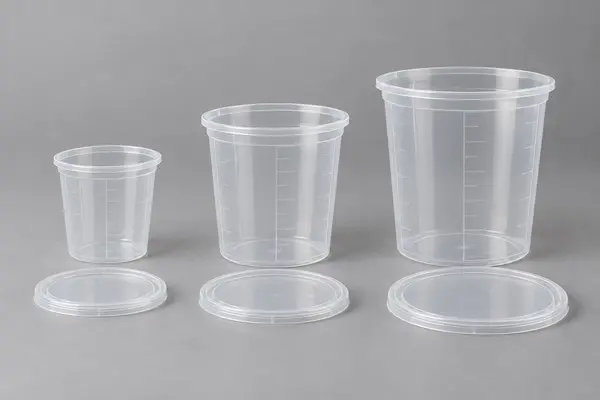
I treat the cup and lid as one system. My sample plan finds fit problems before separate cartons reach the body shop.
Why Do I Match the Lid to the Exact Cup Series?
Two cups can carry the same nominal capacity but use different rim shapes. A lid chosen by volume alone may engage only part of the edge.
I match the manufacturer's cup code and lid code first. I then compare the actual rim diameter, lip profile, groove shape, material, and production sample. I never assume that every pint, quart, or metric-size lid is interchangeable.
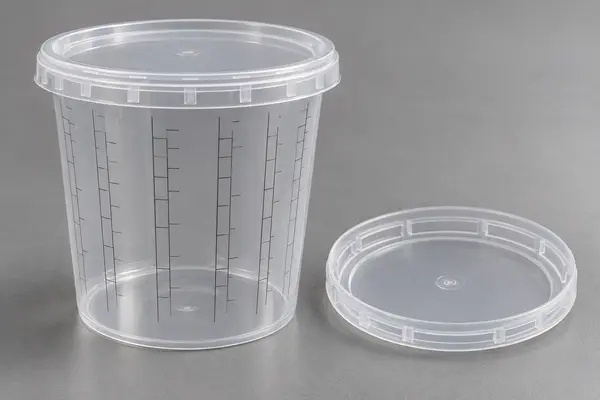
I look beyond the capacity printed on the carton
I use capacity as a starting point, not as the complete fit specification. A cup can have the same usable volume as another cup while its top diameter, taper, rolled lip, or reinforcing ring differs. A small change at the rim can prevent the lid groove from seating evenly.
I ask the supplier to identify the intended cup-and-lid pair with linked item codes. I request a sample from each size in the planned order. If the buyer already stocks cups, I test the new lids on those exact cups rather than on a visually similar sample. I do the same when a buyer wants replacement lids without new cups.
| Matching point | What I verify | Why I verify it |
|---|---|---|
| Cup code | I record the exact cup series and size | I avoid matching by a broad capacity name |
| Lid code | I connect one approved lid to each cup | I prevent warehouse substitutions |
| Rim diameter | I measure the agreed reference points | I find obvious size mismatch |
| Lip profile | I inspect the cross-section and contact area | I check whether the groove can engage |
| Material | I record the agreed cup and lid materials | I control flexibility and handling expectations |
I also check whether one lid is intentionally designed for more than one cup size. If the supplier makes that claim, I verify every listed pairing separately. I do not extend one successful result to another cup without a sample.
I keep spray-gun systems outside this approval. A mixing-cup lid is not automatically compatible with a liner, filter lid, adapter, or gun-mounted cup.
What Physical Checks Show That a Lid Fits?
A lid may sit flat in a product photo while one section remains loose. That hidden gap can appear only when I press, lift, and rotate the container.
I inspect engagement around the full rim, seating effort, distortion, edge lift, removal force, and repeat closure. I use empty cups first and reject lids that rock, buckle, split, or require uneven force during normal hand application.
I use a repeatable empty-cup inspection
I start with the cup on a flat bench. I place the lid level over the rim and press it using the same hand method for every sample. I listen and feel for progressive engagement around the edge, but I do not rely on a sound alone. Some lid designs engage quietly.
I run one finger around the full circumference and view the joint from the side. I look for a consistent height, no lifted section, no white stress marks, and no visible warping. I then hold the empty cup by the sides, rotate it, and apply a gentle normal handling movement. I do not perform an unsafe swing or drop test.
| Check | My method | My rejection sign |
|---|---|---|
| Initial alignment | I place the lid squarely over the rim | I reject a lid that starts at an angle repeatedly |
| Full engagement | I inspect and press the complete circumference | I reject lifted or loose segments |
| Lid shape | I view the top and side under neutral light | I reject buckling or permanent distortion |
| Removal | I open the lid using its intended tab or edge | I reject cracking or uncontrolled release |
| Repeat closure | I repeat only when the intended use allows it | I reject rapid loss of engagement |
I test several pairs from different inner packs when available. I record results with photos and sample codes instead of using only words such as “tight” or “good.”
I do not call a lid leakproof unless an agreed test supports that claim. My basic fit check confirms mechanical engagement for the intended handling step. It does not prove safe transport, long-term storage, pressure resistance, or compliance with coating instructions.
How Do I Test the Pair in the Body Shop Workflow?
An empty-cup fit test cannot show every reaction to paint materials or normal bench use. Skipping a workflow trial leaves compatibility questions unanswered.
I test the approved cup and lid with the buyer's actual coating system under controlled shop procedures. I follow the coating supplier's instructions and safety data, limit the trial to intended short-term use, and record softening, swelling, stress cracking, staining, and fit changes.
I separate temporary covering from storage claims
I first confirm why the body shop needs lids. A shop may use a lid to cover a mixed material briefly between steps, reduce open exposure on the bench, or identify a prepared cup. I write that intended use into the trial. I do not assume that the lid makes the container suitable for shipping or long-term storage.
I prepare only the small test quantity allowed by the shop's procedures. I fit the lid, leave the cup for the planned interval, and then inspect the rim and lid. I compare the result with an unused control pair. I look for a lid that becomes unusually soft, grows loose, becomes brittle, or shows visible stress at the groove.
I also check practical handling. I confirm that a technician can fit and remove the lid without touching the cup contents. I inspect whether residue at the rim prevents engagement and define how clean the rim must be before closure. I never tell technicians to ignore the coating manufacturer's safety, ventilation, disposal, or storage instructions.
I include lid fit in my wider paint mixing cup bulk-order checklist. I also keep the visual scale review separate by using my ratio-marking verification guide. A correct lid cannot compensate for unclear ratios, weak cups, or an unsuitable material.
I retain the tested pair and the recorded workflow. When a component changes, I repeat the relevant fit and contact checks instead of relying on an older approval.
What Do I Put in the Bulk Purchase Specification?
If cups and lids use separate cartons, correct samples can still become incorrect shipments. Unlinked item codes and unequal counts create receiving and inventory problems.
I specify the exact cup-lid pairing, size, material, colors, carton quantities, inner packing, label format, lot identification, tolerance references, approved sample, and inspection method. I also reconcile cup and lid counts before confirming the order.
I control pairing, counts, and receiving
I create one line for every cup size and a linked line for its lid. I avoid generic descriptions such as “large cup lid.” I keep item codes visible on inner packs and cartons so the buyer can reorder correctly.
I compare pieces per inner pack, inner packs per carton, and total pieces per carton. Cups and lids may use different carton counts, so I calculate the required carton quantities rather than ordering equal carton numbers. I also confirm whether the buyer wants spare lids and records that quantity separately.
| Purchase field | What I write | What I check at receiving |
|---|---|---|
| Product identity | I state disposable automotive paint mixing cup or matching lid | I prevent confusion with spray-gun systems |
| Pairing | I link cup and lid item codes | I test the received pair together |
| Quantity | I state pieces per pack and carton | I reconcile total cup and lid pieces |
| Material and color | I state the approved construction | I compare with retained samples |
| Label | I state size, code, and lot information | I check inner and outer labels |
| Inspection | I state sampling and fit checks | I record nonconforming pairs |
I focus on order quantity accuracy, stable quality, fair value, and export-risk reduction. I use a raw-material selection process and do not use recycled production waste as substitute material. My experienced staff and flexible production lines can support large orders, while the written pairing and retained samples guide production and receiving.
I approve paint mixing cups and lids as matched pairs. Exact codes, physical fit checks, workflow trials, and reconciled counts reduce avoidable problems in bulk orders.