
A masking film roll can meet its labeled length and still interrupt a full-vehicle wrap. I check for splices before approving the roll specification.
I specify splice-free automotive masking film when each cut must be uninterrupted and staff cannot work around joins. If I allow splices, I agree on how they are marked, the minimum continuous span, and how I will verify both on sampled rolls.
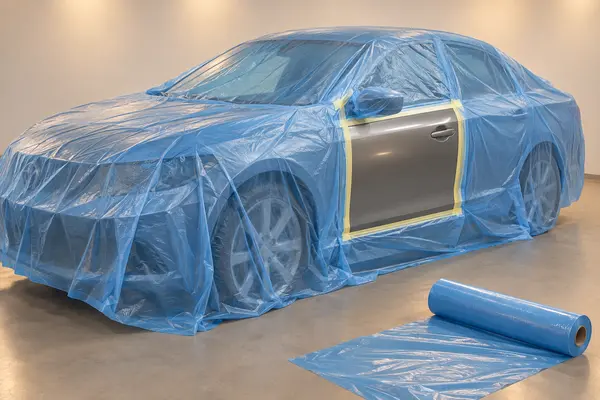
I make this decision before I compare quotes. Two rolls can offer the same total length but yield different numbers of full sheets. Here is how I turn that difference into a specification a supplier can quote and a receiving team can check.
When do I specify splice-free automotive masking film?
An unmarked join can land in the middle of my next vehicle cut. I avoid that interruption by matching the roll specification to the job.
I require a splice-free roll when I need uninterrupted full sheets and cannot sort around joins. I consider marked splices only when I can use the resulting sections without placing a join in a working sheet.
I measure my longest planned cut
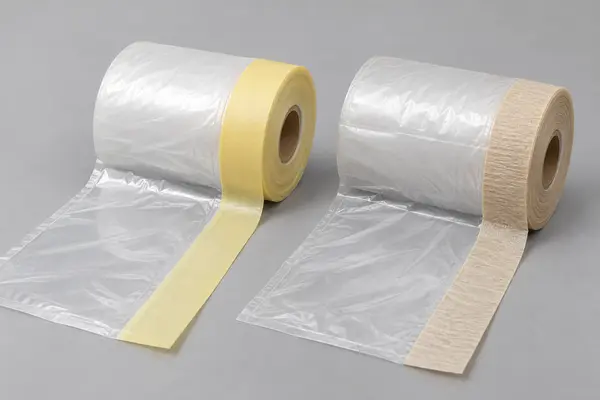
I start with the length I actually cut, including the material I need to position and secure the sheet. I use the longest routine job, not the smallest vehicle in the bay. If I cover large vans and compact cars from the same stock, I write down both cuts. The longer cut sets the minimum span if the roll must serve either job at any time. If I stock different rolls for different bays, I can set a separate rule for each stock code.
I then ask what happens when the operator sees a mark. If the dispenser makes it hard to see the warning before the film comes out, I cannot count on the mark alone. If the operator can stop and set a short section aside for a smaller job, I can consider a marked splice. I make that choice with the body shop before the distributor orders a pallet. Otherwise the receiving team might accept a roll that the paint team will never use.
| My workflow | What I specify |
|---|---|
| I pull full sheets without checking for joins | One uninterrupted web per roll |
| I can divert short sections to smaller jobs | Marked joins and an agreed minimum continuous span |
| I cannot predict what a join will do in use | No joins in any working sheet; trial stock only until I confirm the handling process |
What do I put in the purchase order if I allow splices?
A quote that says “splices allowed” leaves my receiving team without a limit. I define which joins I can work around before ordering.
I specify the maximum number of joins per roll, how I must see the warning, what film I discard around the join, and the minimum uninterrupted length I need after those cuts.
I define a usable span in writing
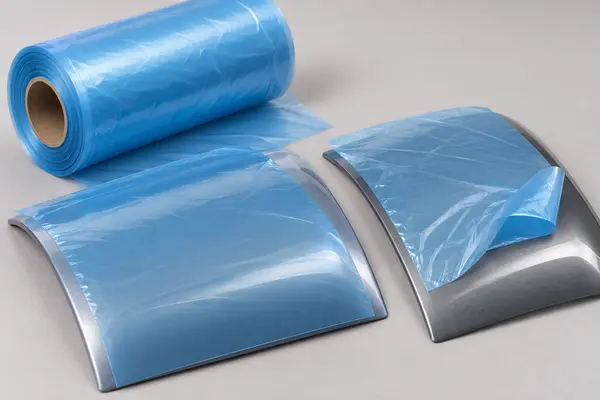
I ask the supplier to describe what counts as a splice. A splice joins separate lengths of film along the roll. I do not count the film attachment at the core as an internal splice, and I do not assume a fold line is a join. I agree separately on whether the leader or the material fixed to the core is usable. If the order allows a splice, I ask for a photograph or physical example showing the actual marking method on the folded roll, not just a drawing of the mark on an open sheet.
I also agree on which side of the join the warning appears and when an operator can see it. I want enough notice to stop feeding before a join enters the planned cut. I ask for a marked sample when the dispenser covers the roll or hides the outside edge. If the mark is only visible after I unfold the sheet, I cannot rely on it to plan the cut at the dispenser.
For a simple example, I might need a six-meter cut and get clean spans of eleven and five meters after discarding the join area. I can take only one six-meter sheet even though I have sixteen meters of clean film. I count whole sheets from each span separately. If I need four full sheets per roll, I put that requirement in the order as well as the minimum length of any span I plan to use. That makes the tradeoff clear: a single join near the end may cost me less than a join near the middle, but either location can matter if the remaining spans leave short offcuts. I also ask how the supplier will identify rolls with a join on the carton label. That lets me route them to the right bay without opening every carton. I use that estimate to compare purchasing options, not as a claim about any supplier's roll.
Looking at the outside of a carton cannot rule out a join inside the roll. I check selected rolls through their full feed path.
I unwind sampled rolls under steady, light tension, inspect each suspect line with the film opened, and log each join and clean span. I compare those results with the purchase order before I release the lot.
I inspect the full sampled roll and keep the evidence
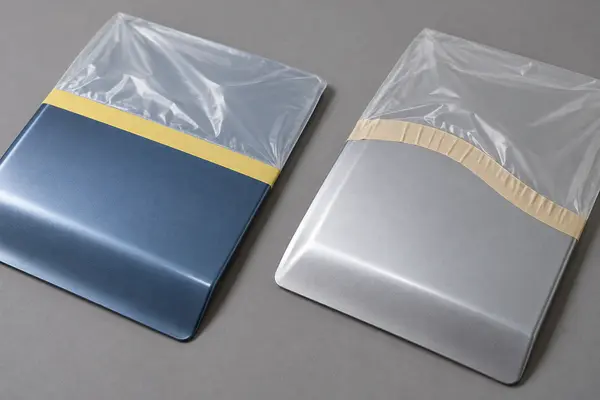
I keep this inspection separate from my roll-length check. I pick rolls from more than one carton, record the carton and lot codes, and note which rolls I open. I agree on the sample size and hold rules in advance. An inspection that only checks the first few meters can help with setup, but I do not use it to verify the rest of the roll. I plan for a clean space and enough time to feed the whole roll. I treat any inspected roll as test stock if I cannot rewind and package it without affecting its condition.
As I feed the film, I pause at changes in thickness, overlap, tape, or visible marks. I unfold that area and inspect both faces. A normal fold is still one piece of film. When I find separate ends or a joint, I photograph the opened area and the warning as it appears during feed. I record the join position and the boundaries of any section that I would discard. I then calculate each remaining uninterrupted span, including the last one.
If I find an unmarked splice in a no-splice order, I hold the affected lot and report the carton, roll, and location. If marked joins are allowed but a span falls short, I report that as a separate failure. I do not average clean spans across rolls, because I cannot cut one sheet from two different rolls. Before a reorder, I send the supplier my longest required cut, the written join rule, and any photos that show where the previous shipment fell short.
I approve a roll for full-vehicle work only when its uninterrupted spans meet my planned cuts and the shipment matches the agreed splice rule.