
I can buy the correct film width and still face jamming, backward unwinding, frame rubbing, or poor cutting. That turns stocked inventory into a workshop problem.
I check dispenser compatibility with the finished pre-taped masking film roll, not film width alone. I confirm core inside diameter, roll width and outside diameter, spindle clearance, winding direction, tape position, cutter reach, brake tension, and a complete load-feed-cut-unfold trial before approving stock.
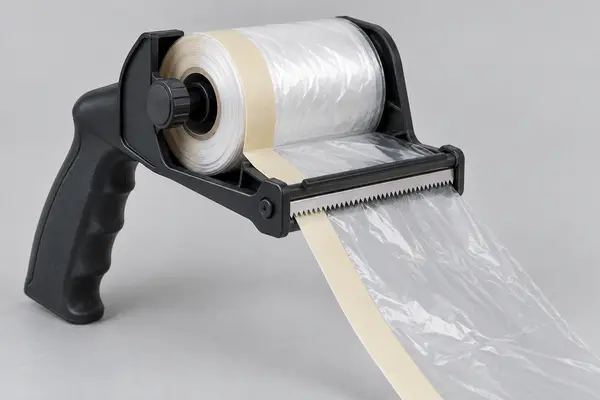
I treat the dispenser and refill as one system. A measurement sheet and installed trial give me a repeatable order decision.
Which Roll and Dispenser Dimensions Should I Match?
A supplier can quote the correct expanded film width while the compact roll still cannot enter my dispenser. One missing dimension can stop the whole refill program.
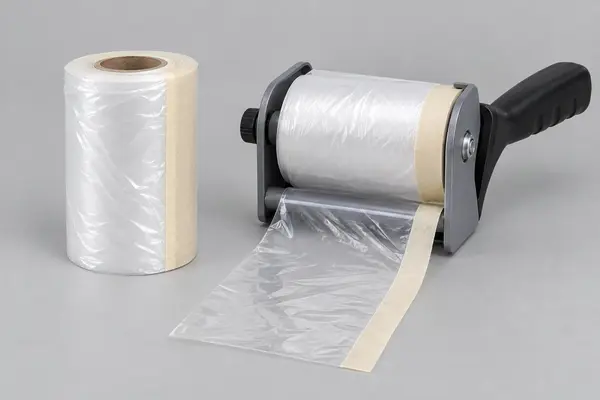
I measure the dispenser first, then specify the finished roll. I match core inside diameter, usable core width, roll face width, maximum outside diameter, spindle length, side-frame clearance, and cutter capacity.
I Build a Compatibility Drawing
I do not rely on words such as standard core or universal dispenser. I identify the exact dispenser model and make a simple drawing from the physical unit. I measure the spindle, the distance between side supports, and the free space available as the roll rotates.
The core inside diameter must fit the spindle without looseness or binding. I also check usable core width because the right opening can still sit badly between supports. The finished roll must clear the frame, guides, brake, and cutter. I record the maximum outside diameter instead of approving only a small sample.
I keep folded roll width separate from expanded film width. Expanded size controls coverage, while compact width and roll geometry control tool fit. My guide to pre-taped masking film width selection handles coverage planning; this check handles the tool interface.
| Compatibility field | What I measure | Failure I avoid |
|---|---|---|
| Core inside diameter | Actual opening and allowed fit | Roll will not mount or wobbles badly |
| Usable core width | Space supported on the spindle | Roll sits off-center or rubs |
| Roll face width | Full wound-material width | Side-frame contact |
| Maximum roll diameter | Full refill at its largest point | New roll cannot rotate freely |
| Spindle and frame clearance | Length, supports, guides, and brake parts | Binding during feeding |
| Cutter capacity | Film-and-tape path across the cutter | Incomplete or difficult cutting |
I attach the drawing to the inquiry. This gives each supplier the same physical limits and prevents a catalog dimension from being interpreted in several ways.
How Do I Confirm Winding and Tape-Edge Orientation?
A roll can fit the spindle and still feed from the wrong side. The film may twist, the tape may face away from the panel, or unfolding may feel unnatural.
I specify which way the roll unwinds, whether material feeds over or under the roll, which side faces the protected surface, where the tape edge sits, and how the folded layers open.
I Approve the Material Path, Not a Direction Name
I avoid terms such as clockwise, reverse wound, or left-hand roll because they change meaning from opposite viewpoints. I use an approved image showing the loaded dispenser, handle, feed path, tape edge, film face, and cutter.
I load the refill in the normal working position. I pull a short section and check that the tape reaches the panel edge before the film opens. I confirm that the film does not cross itself or drag against the frame. I then open the folded layers and check the paint-facing side.
Left-edge and right-edge tape positions are not always interchangeable, so I state the viewing direction. If a distributor supplies several tools, I test each one and create a separate code when the feed path differs.
| Orientation item | My approval reference | Reject signal |
|---|---|---|
| Unwind path | Loaded side-view image | Material feeds against a guide or twists |
| Feed direction | Over-roll or under-roll path | Awkward pull or brake conflict |
| Tape-edge position | Named side from the operator’s view | Tape misses the intended panel edge |
| Film face | Protected-side and paint-facing-side record | Film is applied in reverse |
| Fold opening | Short sequence from compact roll to full width | Layers open backward or tangle |
I keep the reference with the sample code. That is clearer than asking production to remember a direction from an email sentence.
What Installed Dispenser Trial Should I Run?
Measurements can show likely fit, but they cannot reveal uneven braking, telescoping, poor tracking, or an awkward cut. I need to run the refill normally.
I perform a complete load-feed-apply-cut-unfold trial with the production-intent roll. I repeat it at the beginning and near the end of the roll and record loading, tracking, tension, tape contact, cutting, and film opening.
I Test the Real Working Sequence
My first goal is safe, repeatable handling. I install the roll without forcing the core or bending the frame. I check that each brake or tension part contacts the intended surface and that the roll rotates without scraping.
I pull material through the normal route and apply it to a clean test panel. I watch for sideways movement, telescoping layers, tape separation, or core slip. I use the intended cutter and confirm that it reaches both film and tape in one safe action.
After cutting, I unfold the film and inspect the taped edge. I look for tears, stretched film, lifted tape, or floor contact. I repeat the check after part of the roll has been used because diameter and braking behavior change.
| Trial step | What I observe | My rejection trigger |
|---|---|---|
| Load | Core engagement and frame clearance | Forcing, bending, or unstable mounting |
| Feed | Rotation, tracking, and brake feel | Jamming, rubbing, or severe side movement |
| Apply | Tape edge and film path | Tape misses the surface or film twists |
| Cut | One intended cutting action | Incomplete cut or unsafe extra movement |
| Unfold | Layer sequence and final coverage | Tangle, floor contact, or uncontrolled tear |
| Repeat | Start, middle, and near-core behavior | Compatibility changes beyond the agreed rule |
I record the dispenser, roll code, operator view, and result. I do not claim universal compatibility after testing only one tool.
What Should I Put in the Bulk-Order Specification?
A successful test can be lost when the purchase order lists only width and length. A later refill may use a different core, winding direction, or roll diameter.
I link the approved dispenser model and loaded sample to one refill code. My order states core dimensions, roll geometry, winding diagram, tape edge, film orientation, cutter requirement, packing protection, inspection method, and change-control rule.
I Turn the Approved Refill Into a Repeatable Item
I assign one item code to one finished refill construction. The specification includes folded and expanded widths, roll length, tape width, both core dimensions, maximum roll diameter, and winding direction. I attach the loaded-reference image so the numbers and material path stay connected.
I define packaging that protects the core and roll edges. A crushed core or distorted roll can fail even when the approved sample fitted correctly. I specify inner-pack arrangement, rolls per carton, carton protection, labels, and quantity checks.
My inspection plan checks measurable fields before a functional trial. I identify the dispenser used for the trial, the number of samples, the steps, and the acceptance rule. If the supplier proposes a different core, tape position, fold, or winding direction, I require a new loaded sample before using the change in bulk production.
| Order control | What I attach | Why it matters |
|---|---|---|
| Refill item code | One approved construction | Prevents unlike rolls sharing a name |
| Dimension sheet | Core, face width, and outside diameter | Controls physical fit |
| Winding reference | Loaded image and material path | Controls orientation |
| Functional trial | Recorded load-feed-cut-unfold result | Confirms working compatibility |
| Packing standard | Approved protected refill and carton | Reduces core and edge damage |
| Change control | New approval for interface changes | Stops an old test covering a new refill |
I use a raw-material selection process and do not use recycled production waste as substitute material. I focus on stable quality, fair value, order quantity accuracy, and export-risk reduction. A clear compatibility record helps experienced staff keep large orders aligned with the approved refill.
I review the available pre-taped automotive masking film range, then test the exact roll in the buyer’s actual dispenser before confirming the order.
I approve the tool and refill together, document each interface, and repeat the trial before stocking a bulk pre-taped masking film program.