
I see masking film look acceptable at room temperature, then shrink, curl, tear, or lose overspray control after heat. A weak sample test hides that risk.
I test automotive masking film against the body shop’s actual peak temperature and exposure time. I use the finished roll, condition equal samples, run one controlled cycle, then inspect dimensions, flexibility, edges, seams, tape areas, and overspray retention before approving a bulk order.
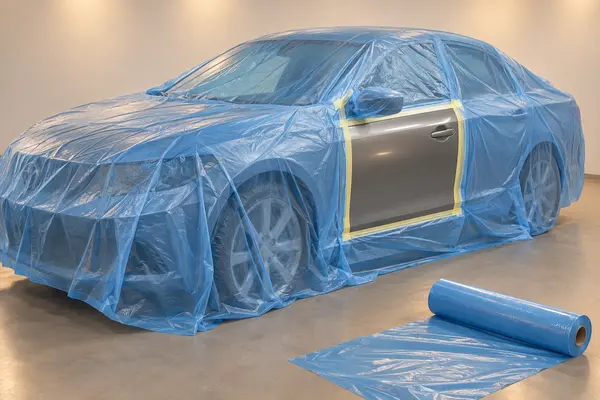
I do not approve a vague “high-temperature” description. I turn the shop process into one repeatable sample test and one written acceptance record.
What Time-and-Temperature Requirement Should I Write?
One temperature number can mislead me when the exposure time, heating method, or cooling stage is missing. I may compare products against different jobs.
I record the normal process, peak temperature, time near that peak, total heated time, heating method, cooling point, and number of cycles. I ask the supplier which limit applies to the exact finished film roll.
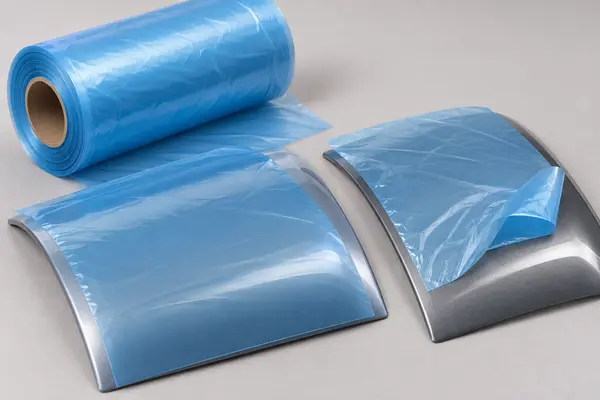
I Define the Real Shop Cycle First
I begin with the intended customer’s paint process. I do not copy conditions from an unrelated tape or film. I record the actual drying cycle, any short peak, and whether the masked vehicle enters the heated stage more than once.
Temperature and time work together. A short peak is not the same as a long exposure. I write both values, permitted variation, and the shop’s approved heating method. I do not use an improvised setup as proof for a commercial process.
I ask whether the stated limit covers loose film or the finished roll. My test represents the folds, seams, printing, treatment, and shop-applied tape that I plan to use.
| Requirement | What I record | Buying error I avoid |
|---|---|---|
| Normal process | The intended drying or repair workflow | Testing for the wrong application |
| Peak temperature | Required value and allowed variation | Treating “high temperature” as measurable |
| Exposure time | Time near peak and total heated time | Comparing unlike claims |
| Cycle count | One cycle or the required repeated sequence | Approving a single exposure for a repeated process |
| Finished configuration | Film, fold, seam, printing, and shop-applied tape | Testing only a loose film swatch |
| Cooling point | When I remove and inspect the sample | Hiding changes that appear after cooling |
This requirement starts my test record. Without it, a pass or fail has little purchasing value.
How Do I Prepare a Fair Masking-Film Test?
If I cut random pieces from different rolls, stretch one sample, or use unlike panels, the result reflects my setup more than the film.
I compare identified samples of equal size from finished rolls. I condition them together, apply them to the same panel shapes, use the same handling and tape method, and keep an unheated control sample.
I Control the Sample Before I Add Heat
I assign every roll a sample code and take material from a normal usable section. I open the film by the intended method and record which side faces the paint area. This controls treatment and printing orientation.
I cut equal pieces and mark reference points on a separate drawing. I measure between those points and photograph flatness, folds, edges, and seams. One matching sample stays unheated so I can separate cycle changes from handling changes.
I mount pieces on the same clean, smooth and curved panels with equal tension and edge fixing. If the shop adds masking tape, I identify it but record adhesion separately. I do not turn a tape failure into a film conclusion.
| Preparation item | My control | Why it matters |
|---|---|---|
| Sample identity | Roll code and material location | Keeps results tied to the tested roll |
| Orientation | Paint-facing side and fold direction | Prevents a reversed sample |
| Dimensions | Equal pieces and fixed reference points | Makes shrinkage or growth comparable |
| Panel | Same smooth and curved shapes | Controls surface geometry |
| Tension | Same application method | Avoids stretching one sample more |
| Control | Matching unheated piece | Separates heat change from handling change |
I test static handling separately with my automotive masking film cling procedure. That keeps this test focused on heat exposure and the condition after cooling.
What Should I Inspect After the Heated Cycle?
A sample can stay in place yet still become smaller, brittle, curled, or difficult to remove. A quick visual glance can miss these failures.
I inspect the film at the agreed hot and cooled stages. I compare dimensions, flatness, flexibility, edge curl, fold and seam condition, tearing, sticking, transfer, removal, and overspray behavior with the control.
I Use Observable Pass-or-Fail Checks
I follow the shop’s safety controls and note lifting, sagging, tightening, or movement near openings. I never ignore equipment procedures. My inspection plan must fit the shop’s approved method.
After the stated cooling point, I remove the sample normally. I remeasure the reference distances and compare them with the start and control. I flex the film by the agreed method and look for cracking, stiffness, weak folds, or new tears.
I check the protected side for contact, residue, or transfer. When overspray retention matters, I use a shop-approved coating sample and observe normal removal and folding. One test does not prove compatibility with every coating.
| Inspection point | My comparison | Possible reject condition |
|---|---|---|
| Dimensions | Start, cooled sample, and control | Change outside the buyer’s agreed limit |
| Flatness and edges | Curves, openings, and fold lines | Unaccepted curl, tightening, lift, or sag |
| Flexibility | Same gentle bend method | Cracking, brittleness, or sharp weak line |
| Surface contact | Protected panel and film underside | Unwanted sticking, residue, or transfer |
| Removal | Agreed normal removal method | Tearing or difficult handling beyond the rule |
| Overspray behavior | Coated sample after drying | Flaking or release outside the accepted condition |
I photograph each reject signal and keep the tested piece. Clear evidence helps me discuss a real construction issue instead of arguing over words such as “strong” or “heat resistant.”
What Evidence Should I Require Before a Bulk Order?
A good sample can lose value when its roll code, test cycle, and acceptance limits never reach the purchase order. Repeat production then follows assumptions.
I approve a signed sample, test record, finished-roll specification, and inspection plan. The purchase order links the film construction to its time-temperature requirement and requires new approval before a relevant material or process change.
I Connect the Test Result to One Product Code
I write material, thickness reference, width, length, folding, core, treatment direction, and printing into the finished-roll specification. I attach the heat-cycle record to that product code and do not transfer approval to a changed construction.
My signed record includes sample codes, starting condition, panels, application, temperature-time profile, cycles, cooling point, measurements, photographs, and decision. If I accept a range, I also state its measurement method.
For inspection, I verify identity and construction before repeating selected heat checks. I also check labels, quantity, packing, and traceability. Heat performance cannot correct a wrong width, reversed film, or short roll.
| Approval document | Required content | Purchasing purpose |
|---|---|---|
| Finished-roll specification | One defined material and roll construction | Identifies what the test covers |
| Signed reference sample | Approved film and orientation | Gives production a physical reference |
| Heat-cycle record | Conditions, results, and acceptance decision | Shows why the sample passed |
| Inspection plan | Checks, method, sample size, and acceptance rule | Makes later verification repeatable |
| Change-control rule | Changes that require a new sample | Stops an old approval covering a new construction |
| Packed reference | Roll protection, labels, and carton arrangement | Reduces receiving and export risk |
I use a raw-material selection process and do not use recycled production waste as substitute material. I focus on stable quality, fair value, order quantity accuracy, and export-risk reduction. The written standard keeps approval tied to the selected film.
I review available constructions on the automotive masking film product page, then approve the exact finished roll against the body shop’s own cycle.
I define the real cycle, control the samples, inspect after cooling, and connect the evidence to one product code before I place a bulk order.