
Film that slides during masking slows the bay, but inconsistent cling can also make unfolding difficult. A weak sample test hides both problems until bulk stock arrives.
I test automotive masking film on clean vertical and contoured vehicle surfaces after equal conditioning. I compare unfolding, initial hold, repositioning, edge lift, and repeat handling, then record the film side, temperature, humidity, sample size, and vehicle panel before I approve a bulk specification.
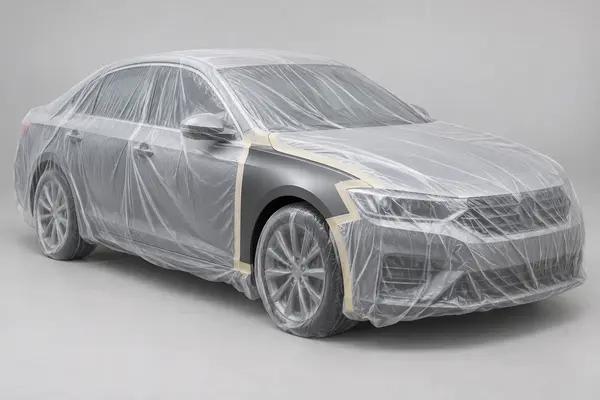
I use a controlled comparison because a quick hand feel cannot show how the film will behave across a full vehicle and a normal body-shop workflow.
What Does Static Cling Need to Do in My Body Shop?
If film will not stay against the body, it shifts during cutting and taping. If it grabs unevenly, my technician spends time opening and correcting it.
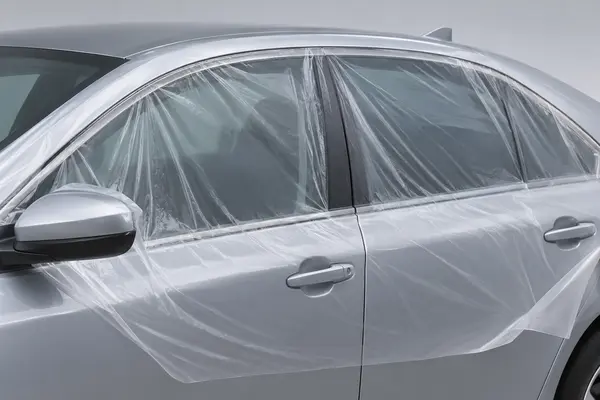
I expect controlled cling that helps one sheet follow roofs, glass, doors, and curved panels without adhesive. The film should still unfold, reposition, cut, and tape in the shop's normal process.
I Define the Job Before I Judge the Sample
I use static cling as a handling feature, not as a claim that solves every masking problem. The film should lie near the vehicle surface while I position it and prepare the repair opening.
I also separate cling from overspray adhesion. Cling describes how the film rests against the vehicle. Overspray adhesion describes how well dried paint remains on the exposed face instead of releasing as flakes. Surface treatment can affect paint retention, but a film can appear to cling well and still perform differently during spraying. I therefore do not approve a sample from a drape test alone.
The best level also depends on workflow. Film that falls away before it is taped creates extra handling. Film that is hard to open or repeatedly sticks to itself can create another delay. I write a practical job statement first: the vehicle types, usual room conditions, application method, dispenser use, typical repositioning, and whether one or two people normally cover the vehicle. That statement keeps the test connected to purchasing.
| Function I examine | What I want to observe | What I do not assume |
|---|---|---|
| Initial cling | Film rests against clean horizontal and vertical areas | Strong hand feel means good paint retention |
| Conformity | Film follows roof edges and broad curves | One flat-panel result covers every vehicle |
| Repositioning | Film can be lifted and placed again | Cling replaces boundary tape |
| Unfolding | Folded layers open in a controlled way | More cling always improves speed |
How Do I Run a Repeatable Vertical-Panel Cling Test?
Two samples tested in different rooms or on different surfaces can give a false winner. That uncertainty makes supplier comparisons unreliable.
I condition samples together, cut equal sections, identify the intended film side, clean the same test areas, and apply each section with the same motion. I then time and record movement.
I Control the Variables That Can Change the Result
I bring every candidate roll into the same test area before comparison and record the room temperature and relative humidity. I do not invent a universal pass range. I use the conditions stated for the product and the real conditions found in the shop. I make sure each sample has had similar storage and conditioning time, because a cold roll taken directly from storage may not behave like a roll used during normal work.
I clean and dry the chosen vehicle panels with the shop's approved method. Dust, polish, water, and oily residue can change the result. I cut equal film sections and mark which face is intended to receive overspray. Then I place each section across the same type of vertical door area and a roof-to-side curve. I use the same starting position, smoothing motion, contact area, and observation time.
I record immediate sliding, progressive edge lift, sagging, wrinkles, and whether the film stays manageable after I lift and reposition it. I repeat the sequence rather than relying on one attempt. My record includes the roll identity, date, operator, panel, film orientation, room conditions, observation intervals, and photos taken from the same angle.
| Test control | My method | Reason I record it |
|---|---|---|
| Sample size | Equal length and width for each film | Different areas create different loads |
| Film face | Intended treated and vehicle-facing sides identified | Reversed film can mislead the test |
| Surface | Same clean, dry panel type | Residue and geometry affect contact |
| Application | Same placement and smoothing motion | Handling should not decide the winner |
| Conditions | Temperature and humidity recorded | Results need useful context |
| Observation | Same intervals and photo angle | I can compare movement consistently |
How Do I Separate Cling From Paint and Tape Performance?
A sheet can remain on a door yet fail another important task. If I combine every result into one impression, I may approve the wrong film.
I score static cling, unfolding, cut behavior, tape handling, tear resistance, bleed-through protection, and overspray retention as separate checks. I approve the complete workflow, not one attractive property.
I Use a Small Test Matrix for Different Risks
I begin with the dry cling comparison. Next, I check how the film cuts around a controlled repair opening without pulling away or tearing beyond the intended line. I apply the shop's chosen masking tape to the relevant film face and substrate according to the tape maker's instructions. I observe whether the tape can be placed, corrected when the process allows it, and kept stable through the planned work.
For any coating test, I use the shop's approved safety controls, paint system instructions, and representative substrate. I compare whether overspray remains attached to the film after the stated drying or process cycle. I do not use this test to claim universal compatibility with every coating or bake cycle. The purchase specification should name the intended application and any supplier-declared operating limit that the buyer needs.
My guide to corona-treated automotive masking film explains why I verify surface treatment and paint-facing orientation. I use the test matrix below to prevent strong cling from hiding weak performance elsewhere.
| Property | My separate check | Purchasing question it answers |
|---|---|---|
| Static cling | Dry vertical and contoured panel test | Does the film stay manageable during placement? |
| Unfolding | Open a full folded section normally | Can staff find and open the sheet efficiently? |
| Cutting | Make a representative repair opening | Does the film cut without uncontrolled tearing? |
| Tape handling | Apply and adjust the selected tape | Does the combination suit the shop process? |
| Overspray retention | Controlled coating test under approved conditions | Does dried overspray remain on the exposed face? |
| Protection | Inspect the covered side and panel | Does the film prevent unwanted contact in the test? |
What Do I Put in the Bulk Purchase Specification?
If my purchase order says only cling masking film, the approved handling result may disappear in production or packing changes.
I specify material, finished width and length, thickness basis, fold pattern, treated face, roll core, center marking, packing quantities, labeling, sample reference, and the agreed cling test method.
I Turn the Trial Into Checkable Order Language
I attach a dated or coded approved sample and a simple test sheet. The test sheet states the film orientation, sample dimensions, panel type, cleaning method, conditioning approach, room conditions, placement steps, observation intervals, and acceptable comparison result. I avoid vague phrases such as strong static or premium cling unless the order defines how I will check them.
I list the full unfolded width rather than only the narrow folded-roll width. I also record usable roll length, thickness measurement basis, fold sequence, film color or transparency, treated paint-facing side, core dimensions, and any center printing. If center guidance matters to the team, I use my separate guide on center printing for automotive masking film rolls to define its purpose and position.
From a manufacturer position, I use a raw-material selection process and do not use recycled production waste as substitute material. I focus on stable quality, fair value, order quantity accuracy, export-risk reduction, experienced production staff, and flexible production lines for large orders. I still rely on the written specification, approved sample, and agreed inspection method to guide an order.
| Specification item | What I record | How I can verify it |
|---|---|---|
| Film construction | Material and thickness measurement basis | Document and sample comparison |
| Finished roll | Unfolded width, usable length, fold pattern | Roll measurement and unfolding check |
| Surface orientation | Vehicle-facing and paint-facing sides | Marking and controlled test |
| Static cling | Agreed method and comparison result | Recorded panel test |
| Handling features | Core, center marking, cutting expectations | Workflow trial |
| Packing | Rolls per carton, labels, quantity units | Packing list and receiving count |
| Approval control | Sample code and revision date | Match order documents to sample |
I approve automotive masking film only after a controlled cling test and separate workflow checks. Clear records turn a subjective sample impression into a usable bulk specification.