
A cheap fender cover can slide, trap grit, or become difficult to clean. Those failures risk paint damage, but the right material specification reduces them.
I choose fender cover material by balancing paint-side softness, workshop-side cleanability, grip, padding, flexibility, and chemical exposure. I never approve a material name alone. I test the finished cover on representative vehicle surfaces and include its face, backing, construction, edges, size, and cleaning method in the purchase specification.
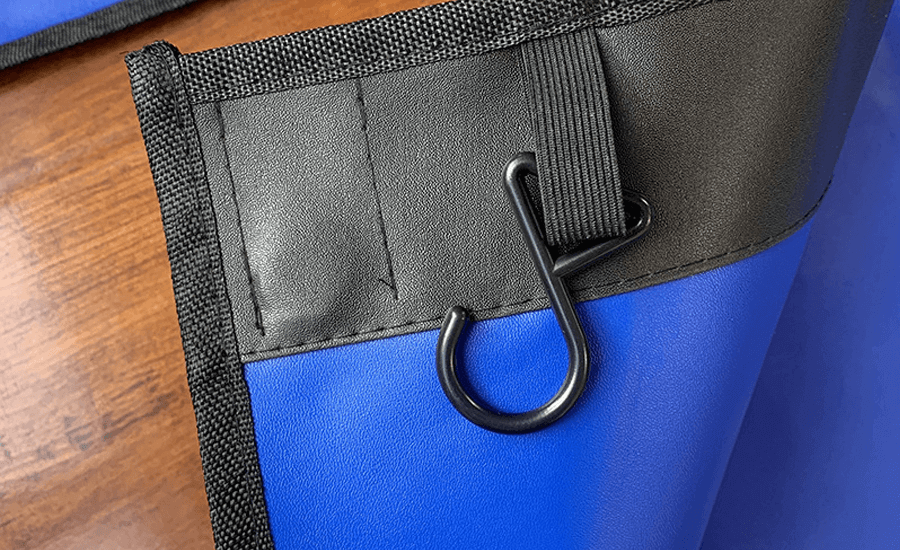
I use the following process to compare reusable covers without confusing appearance, material names, and real workshop performance.
Which Fender Cover Surface Materials Fit Different Repair-Shop Workloads?
A material that looks premium in a sample can become awkward during daily engine work. I first match the surface to the shop’s actual workload and cleaning routine.
I compare smooth coated surfaces, woven synthetic surfaces, and soft textile faces as separate options. I then approve the option that gives the required cleanability, flexibility, grip, and paint-side care.
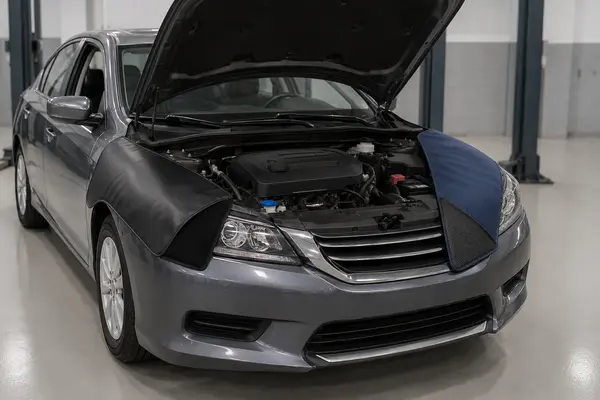
I Compare Material Systems, Not Marketing Names
I see many market descriptions use terms such as vinyl, PVC, nylon, microfiber, leather-like material, or cloth. I do not assume that these words define the complete product. One cover can combine a coated face, foam layer, woven reinforcement, and non-slip backing. Another can use a single flexible textile. I ask for the layer structure and a physical sample before I compare value.
| Material group I review | Where I see a practical fit | What I verify before buying |
|---|---|---|
| Smooth coated face | Greasy or wet repair work that needs frequent wiping | Flexibility, edge feel, backing softness, and buyer-approved cleaning |
| Woven synthetic face | General workshop use where low weight and folding matter | Weave stability, liquid handling, grip, and seam quality |
| Soft textile or microfiber-like face | Paint-sensitive work where a soft contact side is important | Fiber shedding, absorbed dirt, cleaning, drying, and backing construction |
| Padded multi-layer cover | Longer service jobs and tool contact around the engine bay | Padding consistency, bulk, folding, stitching, and movement on the fender |
I treat this table as a selection map, not a performance guarantee. I ask how technicians use the cover. I want to know whether they place hand tools on it, whether oil and coolant exposure is common, how often they clean it, and whether they store it folded or rolled. I also ask whether the shops work mainly on compact cars, large SUVs, vans, or a mixed fleet.
I pay special attention to the paint-side backing. I reject rough seams, hard corners, loose particles, and unsuitable contact surfaces. I use the custom car fender cover page to start the discussion, but the approved sample controls the final order.
How Much Backing and Padding Should I Specify?
More padding can look safer, but extra bulk may reduce grip and make storage harder. I choose a balanced construction instead of asking for the thickest cover.
I specify backing and padding according to contact risk, tool use, cover size, and storage. I approve softness, cushioning, stability, and cleanability separately because one thick sample may not perform well in every area.
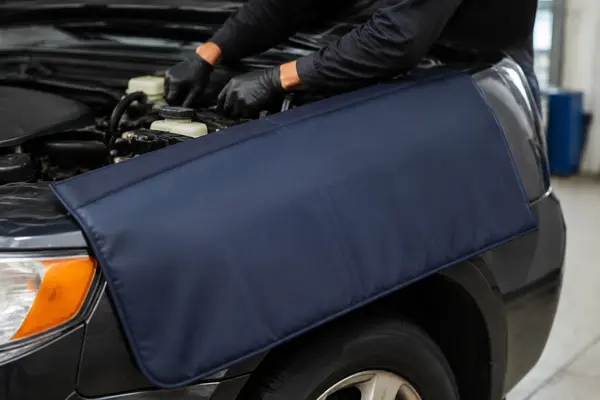
I Separate Paint Contact from Impact Protection
I define the paint-side backing first. I want a clean, consistent contact surface with no exposed hard parts. I run my hand across the backing and edge binding before the cover touches a vehicle. I also inspect stitching ends, hook positions, and enclosed attachment parts. A soft center does not solve a hard edge or uncovered fitting.
I define padding as a separate requirement. I ask whether the cover only protects against clothing, belts, dust, and light contact, or whether technicians commonly rest tools on the covered area. I never present a fender cover as permission to place heavy or sharp tools on painted bodywork. I simply use the expected workshop behavior to decide whether a thin flexible structure or a padded structure is more suitable.
| Construction point | What I check | Buying risk I reduce |
|---|---|---|
| Paint-side backing | Softness, cleanliness, texture, and continuity | Rough contact points and trapped debris |
| Padding layer | Even feel across the useful area | Thin spots and unnecessary bulk |
| Edge binding | Smooth finish around the full perimeter | Hard or abrasive edges near paint |
| Stitching | Secure, flat, and consistent seams | Loose threads and early separation |
| Attachment enclosure | No exposed hard component on the paint side | Direct contact from hooks or magnets |
I approve the exact layer combination, not only a total thickness number. Two covers with a similar thickness can use different faces, foam, backing, and edge structures. I ask the quotation and sample record to describe those layers in plain language so the next order does not depend on memory.
How Should I Test Cleanability, Grip, and Workshop Exposure?
Supplier descriptions such as oil-resistant or non-slip sound useful, but undefined claims create disputes. I replace broad words with simple buyer-approved tests and acceptance notes.
I test the finished cover with representative surfaces, common workshop contamination, the planned cleaning method, and realistic positioning. I record the test condition and result instead of relying on an unsupported material claim.
I Use a Repeatable Sample Check
I begin with a clean vehicle panel or a representative finished surface approved by the buyer. I clean both the surface and the sample backing before placement. I then position the cover as a technician would, including the intended hooks, magnets, weights, or non-slip backing. I observe movement during normal reaching and light service motions. I do not use an unrealistic pull test unless the buyer defines it.
I place a controlled small amount of the buyer-selected workshop liquid on a test area that does not touch a vehicle. I follow the agreed contact time and cleaning method. I then inspect the face, backing, edge, printing area, and seams for visible change. I do not state that every cover resists every oil, solvent, coolant, or cleaner. I require the buyer to identify the substances that matter and approve the result.
I also run a cleanliness check before reuse. I look for trapped grit, sticky residue, absorbed liquid, odor, loose fiber, and incomplete drying. I want the cleaning instruction to be practical for the shop. A cover that requires a process nobody follows can create more risk than a simpler option.
| Sample check | Condition I define | Result I record |
|---|---|---|
| Positioning | Agreed vehicle surface and attachment method | Movement, lifting, and coverage |
| Wipe cleaning | Agreed cleaner, cloth, and number of passes | Residue and visible surface change |
| Liquid exposure | Named liquid, amount, and contact time | Swelling, staining, softening, or transfer |
| Reuse check | Agreed drying and storage method | Cleanliness, odor, shape, and backing condition |
What Details Should I Put in a Bulk Fender Cover RFQ?
An RFQ that says only “heavy-duty fender cover” leaves material, size, backing, and hardware open. I write one specification that connects the sample to the order.
I include intended use, face material, backing, padding, finished dimensions, edge construction, attachment method, color, printing, cleaning instructions, packing, quantities, tolerances, and the approved sample reference.
I Turn the Approved Sample into Order Language
I begin with a product identity line that says reusable automotive mechanic fender cover. This wording helps prevent confusion with full-car covers, disposable paint films, floor mats, or marine fender covers. I then list the face and paint-side backing separately.
| RFQ field | What I write | What I confirm |
|---|---|---|
| Intended use | Vehicle service and fender paint protection | Shop type and common exposure |
| Face material | Agreed coated, woven, or textile description | Visual and touch match to sample |
| Backing and padding | Layer description and approved construction | Paint-side softness and cushioning |
| Finished size | Width × height with measuring method | Coverage on representative vehicles |
| Edge construction | Binding, seam, and corner details | No exposed hard contact point |
| Attachment | Hook, magnet, weight, or non-slip design | Vehicle compatibility and enclosure |
| Branding | Plain, printed, or approved artwork | File, position, and color approval |
| Packing | Units per bag and carton | Labels, counts, and storage needs |
| Quantity | Per color and design | Per-item and total count accuracy |
I keep material selection linked to the attachment design. A large padded cover may behave differently from a light nylon cover when both use the same attachment. I therefore refer buyers to my guide on magnetic, hook, and weighted fender covers when they define the complete configuration.
From my manufacturer position, I use a raw-material selection process, and I do not use recycled production waste as substitute material. I focus on stable quality, fair value, order quantity accuracy, and export-risk reduction. I also use experienced production staff and flexible production lines for large orders. I present these as operating priorities, while I still rely on the buyer’s written specification and approved sample for the final decision.
I choose fender cover material by real workshop use, then lock the face, backing, padding, edges, attachment, cleaning test, and packing into one approval record.