
A reusable fender cover can look clean after one job yet swell, stain, or lose grip after repeated oil and cleaner contact.
I test chemical resistance with defined spot exposures, controlled wiping, and before-and-after checks on the cover face, backing, seams, and magnets. I compare every result with an approved reference sample.
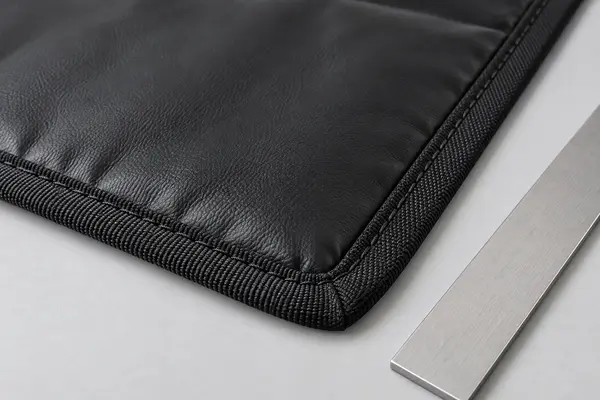
I use this check when I review a new reusable automotive fender cover for body shops, distributors, or importers. I do not treat the phrase “chemical resistant” as a complete specification. I identify the fluids that matter to the buyer, agree on a safe test sequence, and document visible changes without inventing a universal pass number.
Why should I test chemical resistance in reusable fender covers?
Fender covers meet oil, grease, coolant, cleaners, and workshop dirt. A weak surface or backing can transfer residue, stain paint, or lose its protective behavior.
I test chemical resistance because the cover must remain usable after cleaning and repeated service. I inspect the face, underside, binding, stitching, magnets, and any tool ridge as one product system.
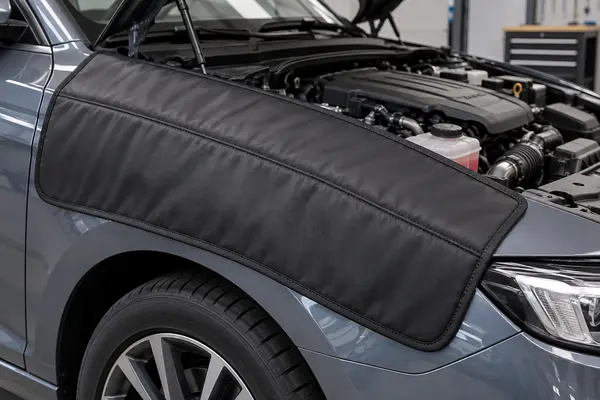
I define the cover construction before exposure
I identify the face material, backing, coating, binding, thread, closure, magnets, and printed areas. I do not assume that a vinyl face, woven face, or padded construction reacts the same way. I keep the product identity separate from disposable plastic covers, seat covers, and generic shop blankets.
| Area I inspect | What I record | Why it matters |
|---|---|---|
| Face surface | Material, finish, color, and print | Chemical contact happens here first |
| Backing | Softness, texture, and coating | A damaged backing may mark paint or lose grip |
| Edge and thread | Binding, seam, and exposed thread | Fluid can enter through weak edges |
| Hardware | Magnets, hooks, or tool ridge | Hardware can corrode, loosen, or trap residue |
| Reference sample | Code, date, and construction revision | Gives every comparison one target |
I list the real workshop exposures
I ask the buyer which fluids contact the cover during normal work. One shop may mainly see engine oil and grease. Another may use a degreaser, glass cleaner, coolant, or a paint-room cleaning product. I do not add a chemical only because it sounds severe. I list the product name, general use, expected contact, and cleaning method.
I keep the sample condition consistent
I inspect the cover clean and dry before exposure. I note whether it was folded, compressed, or stored near heat or sunlight. I do not compare a new flat sample with a creased sample that already has a weakened coating.
How do I run a repeatable chemical-resistance check?
A random spill test creates an unclear result. Different drops, contact times, wiping force, and cleaning products make supplier comparisons unreliable.
I use marked exposure areas, the same fluid condition, a defined contact sequence, and a matched untreated area. I repeat the check on multiple locations and samples.
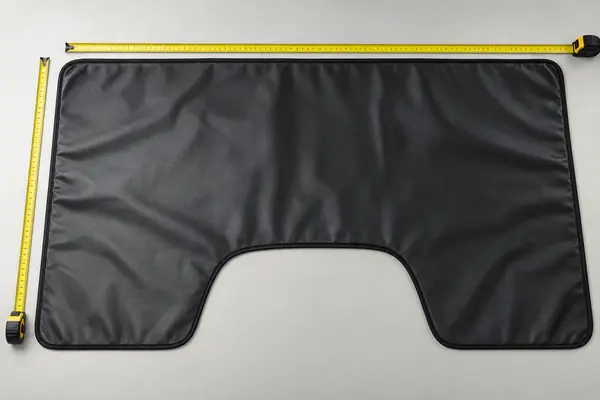
I create a controlled exposure layout
I mark separate zones on a sample or use separate samples when marking could affect the cover. I include a face zone, a backing zone, a seam or binding zone, and a hardware-adjacent zone when the construction allows it. I retain an untreated comparison area.
| Test element | My fixed practice | What I observe |
|---|---|---|
| Fluid | Buyer-approved product in identified condition | Color change, swelling, softening, or residue |
| Location | Face, backing, seam, and hardware area | Local weakness or migration |
| Contact | Same application and covered exposure period | Repeatability between samples |
| Cleaning | Same wipe material and motion | Transfer, gloss change, or tackiness |
| Recovery | Inspect after drying and resting | Permanent or temporary change |
I inspect the face before wiping
I apply a controlled amount to the marked zone and observe the surface during contact. I look for whitening, bubbling, swelling, tackiness, color transfer, gloss change, or softening. I do not claim a product has failed because of a temporary wet mark; I wait for the agreed cleaning and recovery observation.
I also inspect whether fluid spreads through a seam or reaches the backing. A surface may look stable while the edge absorbs liquid. I photograph the zone and record the fluid, location, and observation time.
I use the buyer’s cleaning sequence
I wipe the sample using the agreed cloth or pad and the same number of passes. I avoid adding force claims unless I have a defined instrument and method. I check whether the fluid leaves a greasy film, removes color, roughens the surface, or transfers the face finish to the cloth.
I repeat the exposure on more than one sample
I test multiple covers or multiple marked zones from the same lot. If only one zone changes, I inspect for a local coating, seam, or contamination issue. If the same change appears across samples, I treat it as a construction or material question and hold approval for review.
Which changes should make me hold a fender-cover order?
Minor appearance variation may be manageable, but softening, residue transfer, backing damage, or loose hardware can affect the vehicle and the workshop process.
I hold approval when the repeated exposure changes the cover’s protective contact surface, causes transfer to a clean panel, opens a seam, or reduces the expected grip. I separate isolated shipping damage from a repeatable chemical response.
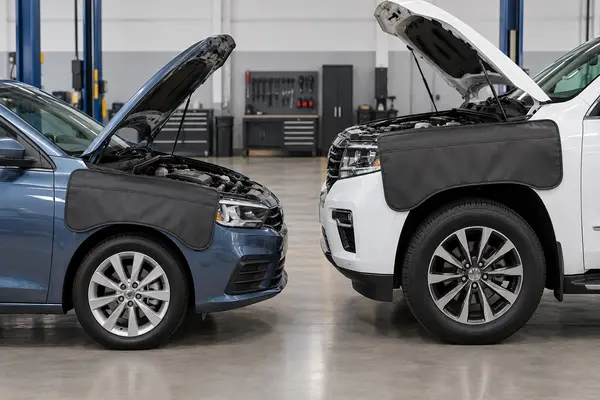
I classify the result before deciding
| Finding | My interpretation | My next action |
|---|---|---|
| No visible change after cleaning | Surface remains stable in the basic check | Continue fit and handling review |
| Temporary wet mark disappears | Possible reversible appearance change | Record and repeat under agreed conditions |
| Persistent stain or gloss change | Surface appearance has changed | Request comparison with reference sample |
| Face becomes tacky or soft | Handling and paint-contact risk | Hold approval and request correction |
| Backing cracks or sheds | Underside construction is affected | Isolate sample and expand inspection |
| Seam opens or thread loosens | Fluid reached a weak construction point | Hold lot and review edge process |
| Magnet or hardware corrodes or loosens | Hardware compatibility issue | Review material and attachment method |
I connect chemical results to vehicle protection
After cleaning the sample, I place the cover on a clean, compatible panel or approved test surface. I check for oily transfer, dye transfer, rough particles, exposed hardware, and movement during normal placement. I do not call this a certified paint-safety test; I record it as a buyer’s practical screen.
I inspect both a clean cover and an exposed-and-cleaned cover. The second condition shows whether repeated service changes the contact surface. I also review whether the cover remains easy to wipe, fold, and store without creating new marks.
I keep chemical resistance separate from durability claims
I do not use one spot test to promise long service life, universal solvent resistance, or protection against every workshop chemical. Chemical response depends on the exact fluid, concentration, temperature, contact time, wiping method, and cover construction. I write only what the sample supports.
What should I put in the purchase specification and inspection plan?
“Chemical-resistant fender cover” leaves too much room for different assumptions. A repeat order needs the fluid list, cleaning method, reference sample, and visible acceptance points.
I connect the approved cover construction to the purchase order and define when a new sample is required. I give receiving staff a short checklist they can repeat without guessing.

I write requirements the buyer can verify
| Purchase field | What I record |
|---|---|
| Product identity | Face, backing, binding, thread, hardware, and revision |
| Exposure list | Buyer-approved oil, grease, cleaner, or other fluid |
| Test method | Location, application, contact, wipe, and recovery sequence |
| Acceptance points | No agreed persistent transfer, opening, tackiness, or backing damage |
| Evidence | Photos, sample code, fluid record, operator, and inspection date |
| Change control | New approval for material, coating, thread, hardware, or cleaning method changes |
I include packing and storage conditions
Chemical response can be affected by storage and transport. I inspect covers from different cartons when the order allows. I check whether folded layers stick together, whether magnets press into the face, and whether a damp or dirty packing condition has created marks before the formal exposure test.
I also state how the buyer should clean and dry the cover after use. I do not invent a universal care instruction. I ask the supplier to confirm the intended cleaning process and keep that process aligned with the tested sample.
I protect repeat orders from silent substitutions
I require reapproval when the supplier changes face material, backing, coating, binding, thread, magnet, print, packing, or recommended cleaner. I use a raw-material selection process and do not use recycled production waste as substitute material. I focus on stable quality, fair value, order quantity accuracy, export-risk reduction, experienced production staff, and flexible production lines for large orders, while keeping these priorities tied to documented samples.
I approve a reusable automotive fender cover only when its tested face, backing, edges, and hardware remain suitable after the buyer’s defined cleaning exposures. A clear fluid list turns a vague claim into a purchasing decision.