
A roll of seat covers can have good film and clean perforations yet jam in the dispenser. I verify the core, width, diameter, and feed path before approving bulk stock.
I test the actual roll on the intended rack or dispenser, measure the core and roll dimensions, pull several covers through the feed path, and record rubbing, drift, resistance, and clean separation.
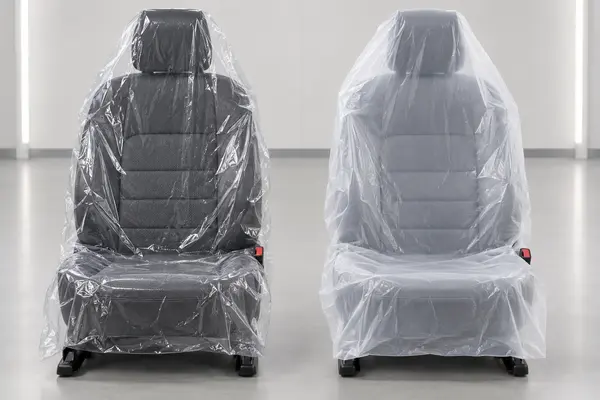
I treat dispenser fit as part of the disposable car seat cover specification. A roll that fits only on a supplier’s sample stand can create slow service lanes, torn covers, and wasted stock. My process turns a vague “fits standard dispensers” claim into a buyer-controlled check.
Which roll dimensions must I specify for disposable seat covers?
“Roll of 500” does not tell me whether the roll will mount or feed correctly. I define the physical dimensions before requesting a quote.
I specify core inside diameter, core length, roll width, maximum outside diameter, winding direction, perforation path, and the cover’s pull direction.

I measure the interface, not only the film
I record the dispenser’s spindle, side guides, box opening, and cutter clearance. Then I match each measurement with the roll.
| Field | My check | Failure if missed |
|---|---|---|
| Core inside diameter | Compare with spindle or bar | Roll will not mount or rotates poorly |
| Core length | Compare with holder width | Roll walks or rubs side guides |
| Roll width | Measure cover and core assembly | Cover edge catches in the box |
| Outside diameter | Check full loaded roll | Roll cannot turn or close the lid |
| Pull direction | Confirm center-pull or end-pull | Covers feed backward or twist |
Dive Deeper
I begin with the actual rack or dispenser used by the dealership. I measure the clear distance between side supports, the spindle diameter, the opening width, and any cutter or retaining bar. I record the measurements in the same units that I will use in the purchase order. I do not accept “universal fit” as a substitute for these details.
I inspect the sample roll before loading. I measure the core inside diameter at more than one point because a crushed paper core may look correct at one end. I check core length, outer roll diameter, cover width, and the position of the first perforation. I also note whether the roll is wound for center pull, end pull, or a dispenser box. A roll may be physically mountable but still feed in the wrong direction.
I keep the film specification separate from the roll interface. Thickness, color, texture, and perforation quality affect use, but they do not replace core and clearance measurements. I photograph the loaded roll with a ruler beside the spindle and retain the sample label. That makes a repeat-order comparison possible when the carton design or roll count changes.
How should I test a loaded roll in the dispenser?
A roll can fit the spindle and still bind when the operator pulls a cover. I run a controlled feed test with the real equipment.
I load the roll without forcing it, pull covers at normal hand speed, and watch whether the roll stays centered, the film rubs the housing, and each perforation separates without tearing the next cover.
I use a repeatable feed sequence
I mark the starting position and test several covers from the top, middle, and lower part of the roll when practical.
| Feed stage | What I watch | Record |
|---|---|---|
| Mounting | Core seating and side play | Tight, loose, or misaligned |
| First pull | Start resistance and edge tracking | Smooth or jerky feed |
| Repeated pull | Roll centering and film drag | Drift, rubbing, or twisting |
| Separation | Perforation break and cover shape | Clean, torn, or doubled |
Dive Deeper
I start with the first cover because a folded leader or tight winding can create a false result. I pull slowly, then repeat at the pace a service technician would use. I keep one hand on the dispenser only when normal operation requires it. I do not hold the roll in line by force, because that hides a core-length or guide-clearance problem.
I check whether the cover emerges flat enough to place over a seat. A roll can separate at the perforation while the cover folds into the housing or catches on a side wall. I record edge drag, roll drift, and any need to reach inside the box. If the operator must pull diagonally, I treat that as a fit problem even if the cover itself is acceptable.
I repeat the sequence after removing and remounting the roll. This shows whether the issue comes from the dispenser setup or the roll. I also compare a second roll from another carton. I do not approve a full shipment from one perfect sample because core crushing, winding pressure, and carton compression can vary.
How do I separate core fit from perforation or film problems?
A torn cover does not always mean the dispenser is wrong. I isolate the interface, roll, and perforation variables before reporting a failure.
I first test an empty spindle and a known-good roll, then compare the suspect roll’s core, winding, perforation, and film width under the same dispenser settings.
I use a short fault-isolation table
I change one variable at a time and keep the same operator and feed direction.
| Symptom | Likely area to inspect | My next action |
|---|---|---|
| Roll will not mount | Core diameter or spindle | Re-measure both interfaces |
| Roll rubs one side | Core length or side guide | Check centering and clearance |
| Pull is heavy | Roll diameter, winding, or housing | Feed a second roll and compare |
| Covers tear at break | Perforation, alignment, or tension | Pull slower and inspect the line |
| Covers twist | Pull direction or guide path | Verify center-pull orientation |
Dive Deeper
I test the dispenser without a roll to confirm that the spindle and guides move freely. I then load an approved reference roll if one exists. If the reference feeds smoothly but the new roll drifts, I inspect the new core length, core damage, outer diameter, and winding alignment. If both rolls fail, I inspect the dispenser, not just the supplier’s product.
I check perforation separately. The previous inspection of the perforation line remains useful, but I do not use it to explain every jam. A correct perforation can still tear when the roll rubs a guide. A perfect core can still produce a doubled cover if the perforation is misaligned. I record these as separate findings so the supplier can correct the right process.
I also inspect how many covers remain when the failure starts. A roll may feed well at the beginning and bind as its diameter decreases or its winding relaxes. I record the approximate roll position, not only the first successful pull. That information helps a distributor decide whether the issue is a shipping deformation, a winding problem, or an equipment clearance problem.
How should I write the bulk-order acceptance rule?
Without a clear roll-interface rule, “compatible” means whatever the receiver wants it to mean. I put the setup and release checks in writing.
I attach the dispenser model or drawing, core and roll dimensions, feed direction, sample sequence, acceptable handling effort, and remedy for rolls that fail the agreed setup.
I lock the approved configuration
I keep the dispenser, roll sample, carton label, and inspection photos together in the purchasing file.
| Order field | My requirement |
|---|---|
| Equipment | Rack or dispenser drawing and opening dimensions |
| Roll | Core, width, diameter, winding, and pull direction |
| Test | Loaded-feed sequence and sample positions |
| Acceptance | No rubbing, binding, drift, or unsafe tearing |
| Remedy | Sort, replace, credit, or hold failed rolls |
Dive Deeper
I state whether the buyer will use a wall dispenser, a bar rack, a center-pull box, or manual dispensing from a carton. I do not let the supplier change the dispensing method after approval without a new sample. If the order uses several roll counts, I test each roll format because the outside diameter and winding behavior may change.
I define who supplies the dispenser and who pays for adaptation if dimensions change. I record the approved film width, cover size, core, perforation, pack count, and carton label. When a repeat order changes film thickness, roll quantity, core material, or carton opening, I return to the feed test rather than assuming compatibility.
As a manufacturer, I use a raw-material selection process and do not use recycled production waste as a substitute material. I focus on stable quality, fair value, order quantity accuracy, export-risk reduction, experienced production staff, and flexible production lines for large orders. I still expect the buyer to approve the actual roll and dispenser combination.
I release rolled disposable car seat covers only when the core, roll geometry, feed path, and perforation behavior work together in the buyer’s equipment.