
Stacked disposable paint mixing cups can lock together, deform at the rim, and slow a busy paint room before the first mix begins.
I test stack separation by checking nesting depth, rim contact, storage pressure, and repeat pull behavior across samples. I approve cups only when technicians can separate them without damaging the rim or markings.
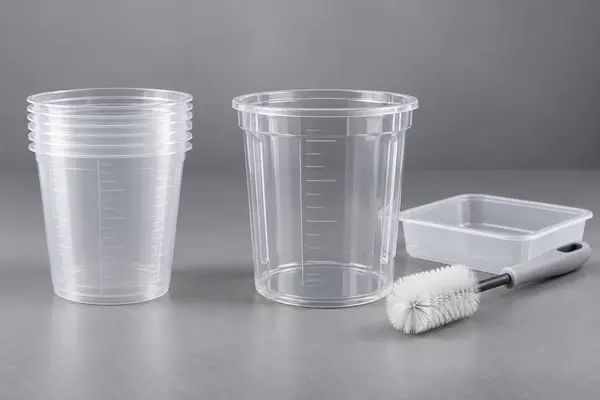
I treat stack separation as a purchasing and workflow check, not a minor packing detail. A cup may have clear graduations and a good lid while still becoming difficult to remove from a nested stack. My goal is a repeatable sample test that body shops, distributors, and importers can document before a bulk order.
Why should I test stack separation in disposable paint mixing cups?
Tightly nested cups can waste labor, bend rims, and create dirty handling when technicians force them apart. Those small delays repeat throughout every shift.
I test stack separation because the cup must arrive as a usable item, not only as a correct shape inside a carton. I compare the approved sample with cups taken from different stack positions and record both ease of release and visible damage.
I separate nesting from cup quality
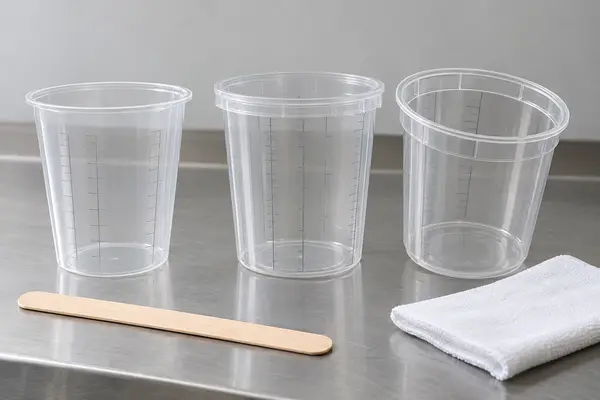
I first identify whether the cup is designed for nesting, whether it has molded stack supports, and whether the order includes lids or sleeves that change the stack pressure. I do not assume that two cups with the same capacity will separate in the same way. Rim diameter, taper, wall flexibility, base shape, and printed surfaces all influence contact.
| Area I inspect | What I look for | Why it matters |
|---|---|---|
| Rim contact | Continuous tight contact or isolated locking points | Shows where separation force begins |
| Taper | Even release from top to bottom | Prevents cups from wedging together |
| Stack supports | Defined spacing or support ribs | Limits deep nesting and friction |
| Wall condition | Dents, oval shape, or collapse | Distortion can lock the next cup |
| Printed markings | Scuffed, transferred, or hidden graduations | Protects measurement readability |
I use the approved sample as my reference
I keep one identified cup from the approved sample set. I record capacity, material description, rim form, wall shape, scale artwork, and packing arrangement. I photograph the cup before nesting so later comparisons do not rely on memory.
How do I run a repeatable cup-separation test?
A single quick pull can hide a tight stack or exaggerate an operator’s technique. I fix the stack size, hand position, surface, and release method before comparing suppliers.
I use a defined stack, separate cups one at a time, and record the first release, the condition of each cup, and any change in effort as the stack becomes shorter.
I test the stack in the condition buyers receive it
I select stacks from the top, middle, and lower part of sample packaging when possible. I do not compress the cups again by hand before testing. If the supplier specifies an inner sleeve or carton divider, I preserve that arrangement until the test begins.
| Test variable | My fixed condition | Reason for control |
|---|---|---|
| Stack size | Same number of cups per comparison | More cups can increase contact pressure |
| Surface | Clean, level workbench | Prevents slipping and tipping |
| Grip | Same rim or sidewall area | Avoids squeezing one cup more than another |
| Pull direction | Straight vertical release first | Reveals wedging without twisting |
| Observation | Photo and note after every cup | Captures progressive damage |
I record release behavior, not invented force numbers
I start with a slow vertical pull. I note whether the top cup releases immediately, moves slightly and stops, or remains locked. If it does not release, I apply a small side-to-side movement only when that motion reflects the intended workshop handling. I do not make a force claim without a defined instrument and method.
I record whether the cup separates cleanly, leaves a mark on the next cup, bends at the rim, or changes shape after release. I also check whether the cup returns to its original shape when placed on the bench. A temporary flex is different from a permanent oval opening.
I repeat the test across multiple samples
I test several cups from the same stack and then repeat the sequence on another stack. If the first cup separates easily but the lower cups lock, I record the position. If only one cup fails, I inspect that cup for damage or contamination before blaming the whole batch.
Which defects should make me hold a cup order?
Some resistance is manageable, but repeated locking or rim damage can create daily labor and unusable inventory. I need a clear line between a minor handling mark and a shipment-level problem.
I hold approval when the same failure repeats across stacks, when cups lose their shape, or when separation damages the rim, printed scale, or lid interface. I investigate isolated defects separately.
I classify the failure before deciding
| Finding | My interpretation | My next action |
|---|---|---|
| Clean release with stable rim | Nesting is workable in the basic test | Continue lid and material checks |
| One tight cup with visible contamination | Local handling or packing issue | Isolate and repeat with a clean sample |
| Repeated wedging at the same taper zone | Geometry or stack-support issue | Hold approval and request correction |
| Rim bends during normal pull | Wall or nesting pressure problem | Request a revised sample |
| Print transfers between cups | Surface or curing concern | Check material, ink, and packing conditions |
| Cup stays oval after release | Permanent deformation | Reject affected construction until corrected |
I connect separation to the rest of the workflow
I place separated cups on a level surface and check their bases. A cup that rocks can affect mixing and pouring even if it separates easily. I inspect the graduations because scuffed or hidden markings can create a second problem. If lids are included, I fit a matching lid after separation to confirm that the rim still engages correctly.
I also test the practical sequence a technician follows: take one cup, read the scale, place it on the bench, add components, and attach the lid if required. I do not call a cup acceptable because it separates in my hand if the released cup cannot stand or close normally.
I keep material compatibility separate
I do not use a stack test to claim solvent resistance, anti-static behavior, or safety. Those are separate checks. If a cup softens or changes shape after contact with the intended coating, I record a material-compatibility issue and follow the buyer’s approved procedure.
What should I include in the purchase order and receiving plan?
“Stackable cups” is too broad for a repeat order. Without a defined separation method, a supplier can change the taper, packing pressure, or stack support while the product name stays the same.
I attach the approved physical cup and artwork reference to the order. I specify nesting arrangement, inner-pack quantity, carton quantity, separation expectation, inspection locations, and change triggers.
I write a specification that receiving staff can use
| Purchase field | What I record |
|---|---|
| Product identity | Capacity, material, rim, base, and artwork revision |
| Nesting | Cups per stack, sleeve method, and stack direction |
| Separation check | Stack size, grip, pull direction, and observation points |
| Condition | No crushed rims, permanent oval shape, heavy scuffing, or print transfer |
| Packing | Inner-pack count, carton count, carton protection, and marks |
| Change control | New approval for mold, resin, wall, rim, artwork, or packing changes |
I sample more than one carton
I select cartons from different pallet positions when the order size allows. I inspect cups from the top, middle, and lower parts of selected stacks. I record carton code, stack position, sample count, and failure description. This helps me distinguish a local packing problem from a construction problem repeated across the lot.
I connect the test to stock control
I ask the buyer or distributor how cups move from carton to bench. A stack that works in a factory sample may become difficult after long storage, temperature changes, or carton compression. I therefore review carton dimensions, sleeve protection, storage orientation, and stock rotation. I do not invent a storage-life guarantee; I specify the conditions that matter and ask the supplier to confirm the packing design.
I protect repeat orders from silent changes
I require reapproval when the supplier changes raw material, mold, wall thickness, rim profile, stack support, printed surface, lid code, inner sleeve, or carton load. I use a raw-material selection process and do not use recycled production waste as substitute material. I focus on stable quality, fair value, order quantity accuracy, export-risk reduction, experienced production staff, and flexible production lines for large orders, while keeping those priorities tied to documented samples.
I approve a disposable paint mixing cup only when it separates consistently, keeps its rim and markings intact, stands correctly after release, and matches the written packing plan. A small stack test can prevent a large daily workflow problem.